


As it has been rightly said, “Rome was not built in a day.” Similarly, a language does not come into being all of a sudden. Neither does it grow and flourish in a short span of time. It may take hundreds and even thousands of years before a language becomes full-fledged. Language experts say that Sanskrit is the mother of all Indian languages and, as far as languages of this region are concerned, Odia, Bengali, Maithili and Assamese owe their origin to the same source. It is because of this reason that we find a lot of affinities amongst these sister languages. The theory that the Sambalpuri language might have developed independent of Odia cannot be ruled out, as it is a natural process when a language is automatically influenced by so many factors like local culture and culture in the surrounding areas. As per the other theory, even if Sambalpuri is an offshoot from Odia with influence of Hindi and other languages on it, the flowering of both at the same time can hardly be denied. Anyway, history takes a back seat now that it has all the makings of a full-fledged language being spoken over a large tract of land comprising eight to ten districts in the area. A language is standard or not is also immaterial, as even a dialect can turn out to be a language with the course of time. Now the question arises as to how to develop the Sambalpuri language at hand:
- Linguistic conferences with experts from within the area must be convened in different places periodically so that differences of opinion on various aspects of the language can be sorted out.
- Grammar must be based on all the varieties of the language available in the area. We must remember that;
“Naed ke Baank, Bhasha ke Faank”.
Every five kilometres a language or dialect would undergo a change. It is therefore essential that grammar should take the varieties within its fold. Moreover, grammar should be simple without being rigid. Modern-day linguists say that enough is enough with traditional grammar which is prescriptive. Grammar should only describe a language.
- More and more words should be collected from the rural areas and compiled in the dictionary. While so doing, words as available in the area irrespective of districts must be included so that the vocabulary is highly enriched.
The whole of western Odisha is very rich in its culture and there are words aplenty of indigenous origin which can very well be compiled. Though there have been dictionaries making an attempt at such compilation, more research seems to be the need of the hour. It is surprising that there are words in the Sambalpuri language which can hardly be found in Odia and Hindi. We can have a look at certain words of indigenous origin; GURMUTEI HEBA, LEDA, CHHIN CHHAN, ΚΑΝΚΑΝΑΒΑ, TANDHEI, BUREI, TAR SUKHE, KANTEI KUILI and hundreds and thousands of other words.
All these words must be used in context and the search for more and more colloquial words must go on. Poets and writers should not hesitate to make use of such words in their works, thereby playing a pivotal role in the development of the language.
- There is no harm in borrowing words from other languages as per requirement and assimilating the same. We must not forget that English, the international lingua franca, is mostly a borrowed language. It can even assimilate Indian words like Tandoori and Pipal. We can very well borrow words from Odia, Hindi and other languages and add to the stock of words. It is better than coining words sounding very odd, unusual and strange.
- Poets and writers should be more and more well-read and open to the outside world. While writing in the language, they should not think that their readership will be limited. Creating more and more good literature is the need of the hour. Publishers of the area should also come forward to encourage the poets and writers writing in the language.
- The idea that Sambalpuri is a colloquial language of the rustic people or some sort of a dialect must be discarded. Certain words are not in use as these sound obscene. All the available words in the language must be put to use in context. Our mentality has got to undergo a change. As, for example, we prefer ‘Woman’ or ‘Mahila’ to ‘Maejhi’ and ‘Wife’ or ‘Stree’ to ‘Kania’.
- Our approach to language must be open and positive. No language is our enemy, and a language can develop only in a free and congenial atmosphere. We can learn from others and let others learn from us. Respect for other culture and languages will only bring respect for one’s own.
Developing a language is no easy task. It may be time-taking, at the same time requiring patience and constant and sincere efforts.
(The views expressed are the writer’s own)
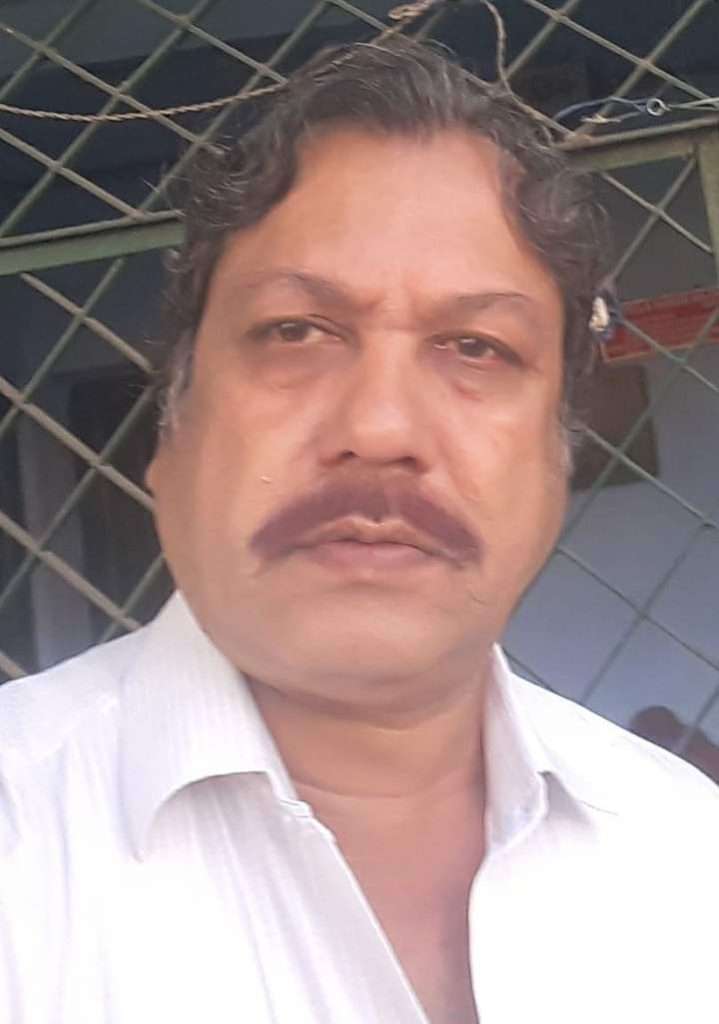
Mr. Prafulla Kumar Majhi,
Retired Asst. Director, A. I. R, is an eminent Scholar and freelance writer in English & Odia. His areas of interests are sociocultural, economic, literary, historical and analytical studies and writings.
Email: airprafulla61@gmail.com
Mobile.9861007190