

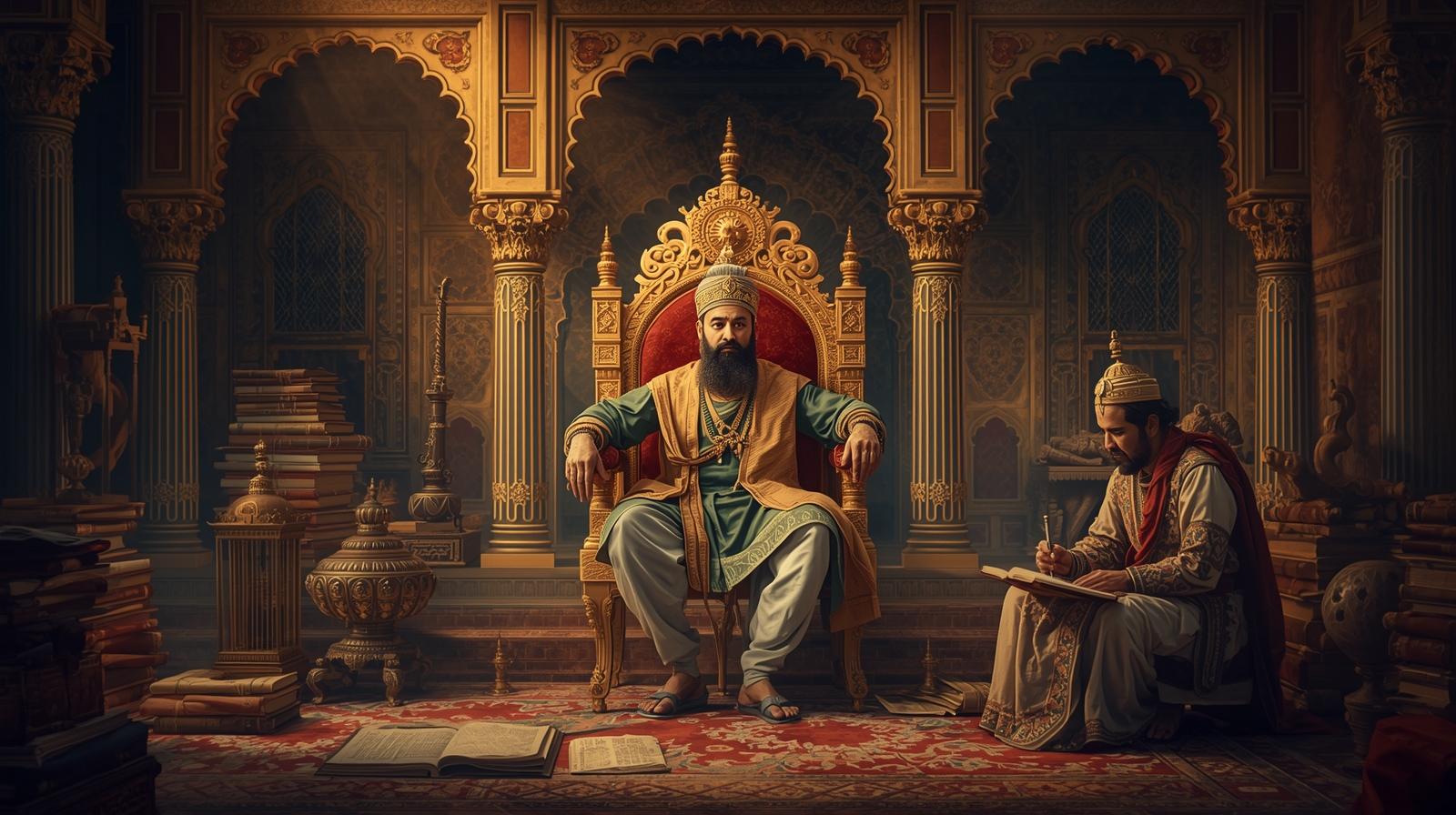
Aini-Akbari is a detailed document regarding the Mughal emperor Akbar’s administration. The writer was Abul Fazl, the court historian of Akbar. It was written in the Persian language between 1589–1596. Abul Fazl was a fine writer. At that time, people were saying, “If you want to be a writer, be a writer like Abul Fazl.” Moreover, Abul Fazl had first-hand information about Akbar’s administration. So we get authentic information about the Mughal Empire.
Aini Akbari is the third part of Akbarnama, a larger document. It is the Aina of Akbar’s reign. Ain means the mode of governing. It contains administrative reports and statistical returns of the Mughal government around 1590.
Aini-Akbari is divided into five books. The first book, Manzil-Abadi, deals with the imperial household and its maintenance. The second, Sipah-Abadi, deals with the servants of the emperor, both civil and military. The third, Mulk-Abadi, deals with imperial administration, the judiciary, and executive functions. The fourth contains information on Hindu philosophy, science, customs, and literature. The fifth contains the sayings of Akbar. The ancestry and biography of the author are also dealt with.
Volume I
Manzil-Abadi — It has a total of 90 Ain (regulations) of different segments of administration: the imperial mint, workmen, and the process of refining and extracting gold and silver. Mints are known as dirham and dinar, etc. Many things were in the Manzil-Abadi — the imperial harem, royal seals, the imperial kitchen, including rules of food and time. The volume contains items such as fruits, vegetables, perfumes, carpets, etc.
Aini is an important source on Mughal maintenance of the army during Akbar’s reign — artillery, upkeep, and branding of royal horses, camels, mules, and elephants. Food given to animals is also mentioned. Labour wages and house building are also mentioned.
Volume II
Sipah-Abadi — It is the military establishment. This volume contains the treatment of the servants of the court. This volume contains the famous Mansabdari system.
Volume III
Mulk-Abadi — It is the government establishment. This volume contains the judiciary and executive, the survey of the land, and tribal divisions. Raja Todarmal’s Bandobast is mentioned in this volume. Revenue collection in 15 subahs is mentioned in this volume.
Volume IV
Land and social condition — This volume mentions social conditions, literary activity, philosophy, and the laws of the Hindus. There are also chapters on foreign invaders of India, eminent travellers, Muslim saints, and seats.
Volume V
Things spoken and done by Akbar — This volume contains the morals of Akbar.
Aini Akbari is a book on ideal administration. Every administrator should read this book and keep it by his side. It is a mirror of administration. Every man in power should abide by the rules of Akbar. The great Akbar preferred affection to the sword. Like Ashoka, Akbar was also a wise ruler — the philosopher king. The three volumes of the English translation of Aini Akbari were published by The Asiatic Society of Bengal.
(The views expressed are the writer’s own.)

Radhakanta Seth is a Former Income tax officer in Sambalpur. He is a Freelance writer and his articles have been published in some Oriya dailies like Sambad, Samaj, Dharitri and English dailies like The Telegraph and in a sociological journal ‘Folklore’ published from Kolkata.
(Photo has collected from net )