

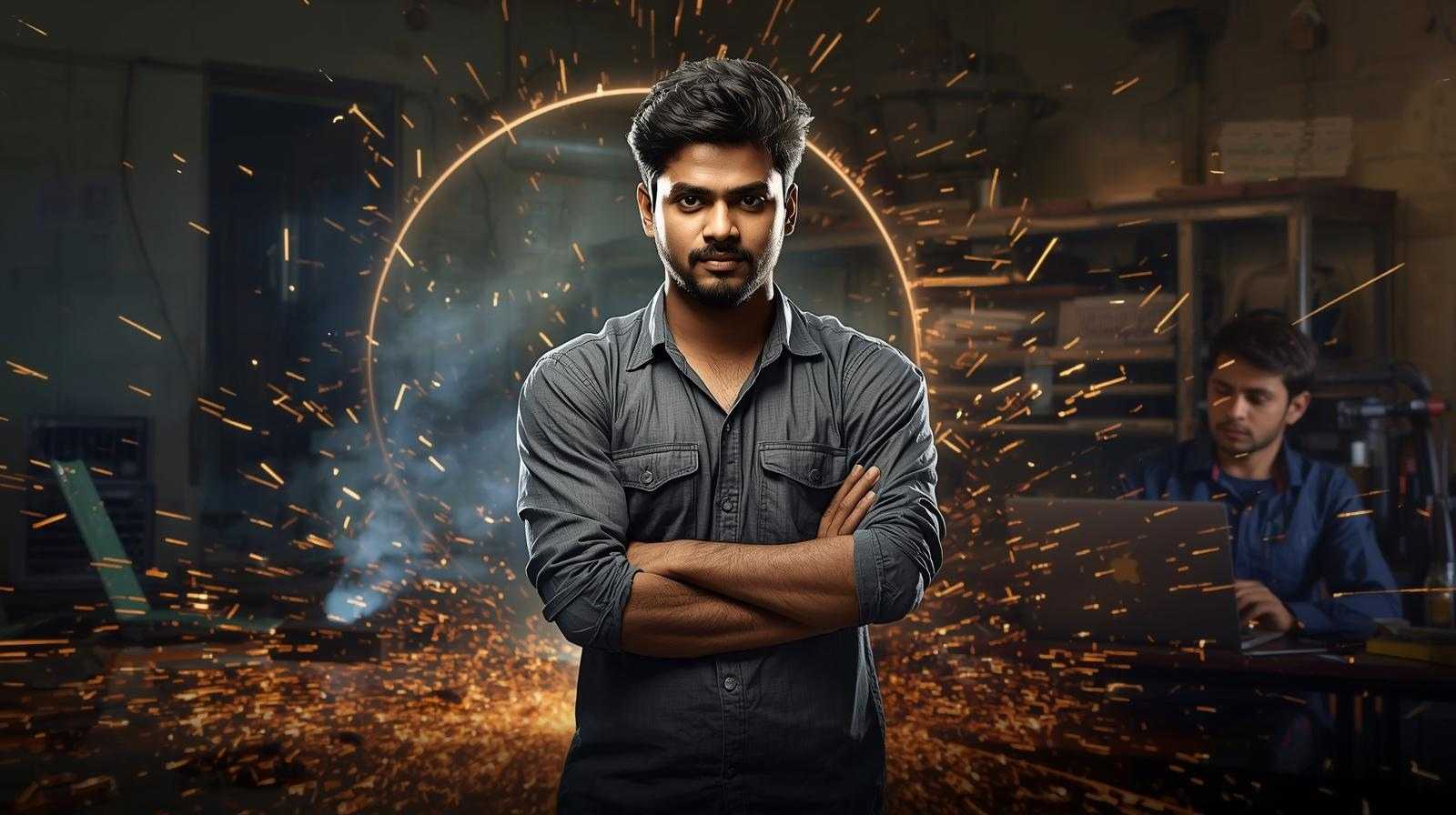
Odisha has once again asserted its dominance on the national stage, securing the top spot at the IndiaSkills Competition for the third consecutive time. To the casual observer, this “hat-trick” of excellence might look like a simple tally of gold, silver, and bronze. But for those of us who have lived this journey since the inception of the ‘Skilled in Odisha’ vision in 2016, these medals represent something far more profound: the systematic dismantling of an ancient social hierarchy that has held back millions of talented Indians for generations.
These victories do not belong only to the students who stood on the podium. They belong to the instructors who stayed late in workshops illuminated by bare bulbs; to the parents who defied neighborhood opinion and enrolled their children in vocational training; and to an administration that dared to believe that skill could be a pillar of state identity, not merely a welfare footnote.
“These medals are not a trophy. They are a statement – that the hand that shapes steel deserves the same applause as the mind that writes code.”
The Anthem of a New Generation
It seems like only yesterday that the “Skilled in Odisha” logo was unveiled in April 2018, at an event that felt more like a cultural declaration than a government function. In the brief span since, that logo has transcended branding to become a cultural pulse. Today, in our Industrial Training Institutes and World Skill Centres, the phrase is not just a tagline; it is a battle cry — one chanted with the kind of fervor that was, until recently, reserved exclusively for cricket and cinema.
Our trajectory from a runner-up finish in 2018 to undisputed No. 1 in three subsequent editions is the result of a rigorous, state-wide philosophy of excellence. We did not merely build workshops and fill seats. We built a system that prizes passion over rote learning, hands-on mastery over theoretical recall, and grit over privilege.
We introduced world-class training standards benchmarked against WorldSkills International norms, brought in industry mentors who had competed on global stages, and created a competitive ecosystem where students from Koraput and Kalahandi could dream the same dreams as those from Bhubaneswar and Cuttack.
These champions are now the “Brand Ambassadors of Skill,” possessing an indomitable spirit that refuses to be sidelined by traditional academic elitism. They are not consolation prizes for those who ‘could not make it’ to engineering or medicine. They are first-choice champions in a first-choice field.
The “1983 Moment” for Vocational Education
To understand what Odisha is attempting, one must recall June 25, 1983, when Kapil Dev lifted the Prudential World Cup at Lord’s Cricket Ground in London. India’s improbable victory that day did not merely change cricket’s fortunes — it rewired the national imagination.
Suddenly, every parent across the subcontinent saw a future for their child in a sport previously considered a rich man’s pastime or a colonial inheritance. Sachins and Gangulys were manufactured not in elite academies, but in gullies and maidans, because an entire generation had been given permission to dream.
Odisha’s consistent dominance in skilling is our “1983 moment.” We are making skill contagious.
When a student from a rural district of Mayurbhanj or Gajapati represents India on a global stage in Shanghai, competing in precision engineering or cloud computing alongside the finest young technicians from Germany, Japan, and South Korea, they do not merely win a medal. They become a hero to their peers, a source of pride for their village, and a living, breathing counter-argument to every counsellor who ever told a student that vocational training was a lesser path.
We are successfully architecting a new aspirational narrative — one where a master welder commands the same societal reverence as a software engineer, where a culinary arts champion is celebrated in the local press with the same enthusiasm as a JEE topper.
This shift will not happen overnight, but it is happening, and Odisha is at its vanguard.
“When a student from Mayurbhanj competes at Shanghai, they do not just win a medal. They rewrite what is possible for every child in their village.”
The Deeper Work: Dismantling Hierarchies of the Collar
As we celebrate these victories, we must speak plainly about the cultural obstruction that no policy alone can remove. India, for all its democratic promise, has long operated under what might be called a “caste of the collar.”
In this unspoken taxonomy, mental labour is placed on a pedestal, and manual skill is treated as a fallback — something one defaults to when the ‘real’ opportunities dry up.
This prejudice does not reside only in employers; it lives in drawing rooms, in matrimonial conversations, and in the quiet discouragement a parent offers a child who shows talent for making things with their hands.
This is the hierarchy we must interrogate with the same vigour that we interrogate caste and gender discrimination, because its consequences are just as damaging.
Consider this: India produces hundreds of thousands of engineers annually, a significant portion of whom work in roles entirely unrelated to engineering, while simultaneously facing an acute shortage of precision machinists, licensed electricians, and certified automotive technicians.
We are over-producing credentials and under-producing competence, and the cultural hierarchy of the collar is responsible.
A truly progressive society and a truly competitive economy is one where a welder, a plumber, or a robotic technician can dream of a “better life” in every dimension: not just a higher wage packet, but a seat at the table as a respected neighbour, a valued citizen, and a worthy social equal.
This means that the fruits of skill must extend beyond income to include matrimonial dignity, community leadership, and the quiet self-assurance that one’s work is honoured, not merely tolerated.
Building the Infrastructure of Aspiration
The State Government’s investments in the World Skill Centre at Bhubaneswar and the future ones at Berhampur and Sambalpur represent more than infrastructure expenditure. They are a statement of values: that world-class facilities can be availed by a young person from a tribal hamlet as easily as one from a metropolitan suburb.
These centres are equipped not merely with modern machinery, but with an ethos. Assessment is aligned with international benchmarks. Trainers are themselves trained to the standards of WorldSkills experts. Industry partnerships ensure that what is learned in the classroom is immediately applicable on the shop floor. And crucially, alumni networks ensure that those who succeed are visible — that their faces are on walls, their stories are in newspapers, and their journeys are shared in schools where the next generation is forming its sense of what is possible.
Respect: The Final Destination
In all our planning and all our medal tallies, we must never lose sight of a simple truth: skilling is a means to an end, and the end is not merely employment.
Employment is necessary, but it is not sufficient.
The final destination of every skill policy must be respect.
Respect means that a certified electrician can walk into a bank and secure a loan without being made to feel like a supplicant. It means that a skilled chef who has trained to international standards is not asked by a prospective in-law whether he “considered engineering.”
It means that a young woman who has qualified as a CNC machine operator is celebrated, not consoled.
These are not abstract ambitions; they are the lived experiences that determine whether skilling programmes succeed or become elaborate exercises in paper certification.
At our World Skill Centres and through our state-wide skilling ecosystem, we are working to prove, institution by institution, life by life, that the Hand deserves the same honour as the Head. That the person who builds the bridge is as valuable as the person who designs it. That dignity is not a certificate you hang on a wall — it is a social contract that a community must honour every single day.
“Skilling is the means. Employment is the milestone. But Respect — deep, abiding, social respect — that is the destination.”
Odisha’s hat-trick at IndiaSkills is a cause for celebration, but it is also a call to action. The medals tell us that our system works. The real test is whether our society is ready to honour what the system produces.
In the grand architecture of our state’s future, skilling is the foundation. But Respect — for the welder, the plumber, the chef, and the electrician — is the keystone without which no structure can stand.
It is time for all of us — parents, teachers, employers, and citizens — to build that keystone, together.
(The views expressed are the writer’s own)
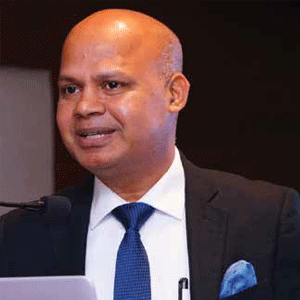
Rashmi Ranjan Mohapatra | CEO of World Skill Center, Odisha
Rashmi Ranjan Mohapatra is the CEO of World Skill Center, Odisha, with 28+ years of global industry experience. An alumnus of NIT Trichy and Harvard Business School, he is known for driving innovation, sustainability, and impactful business solutions, particularly in agriculture and polymer industries, benefiting over 10 lakh farmers.