

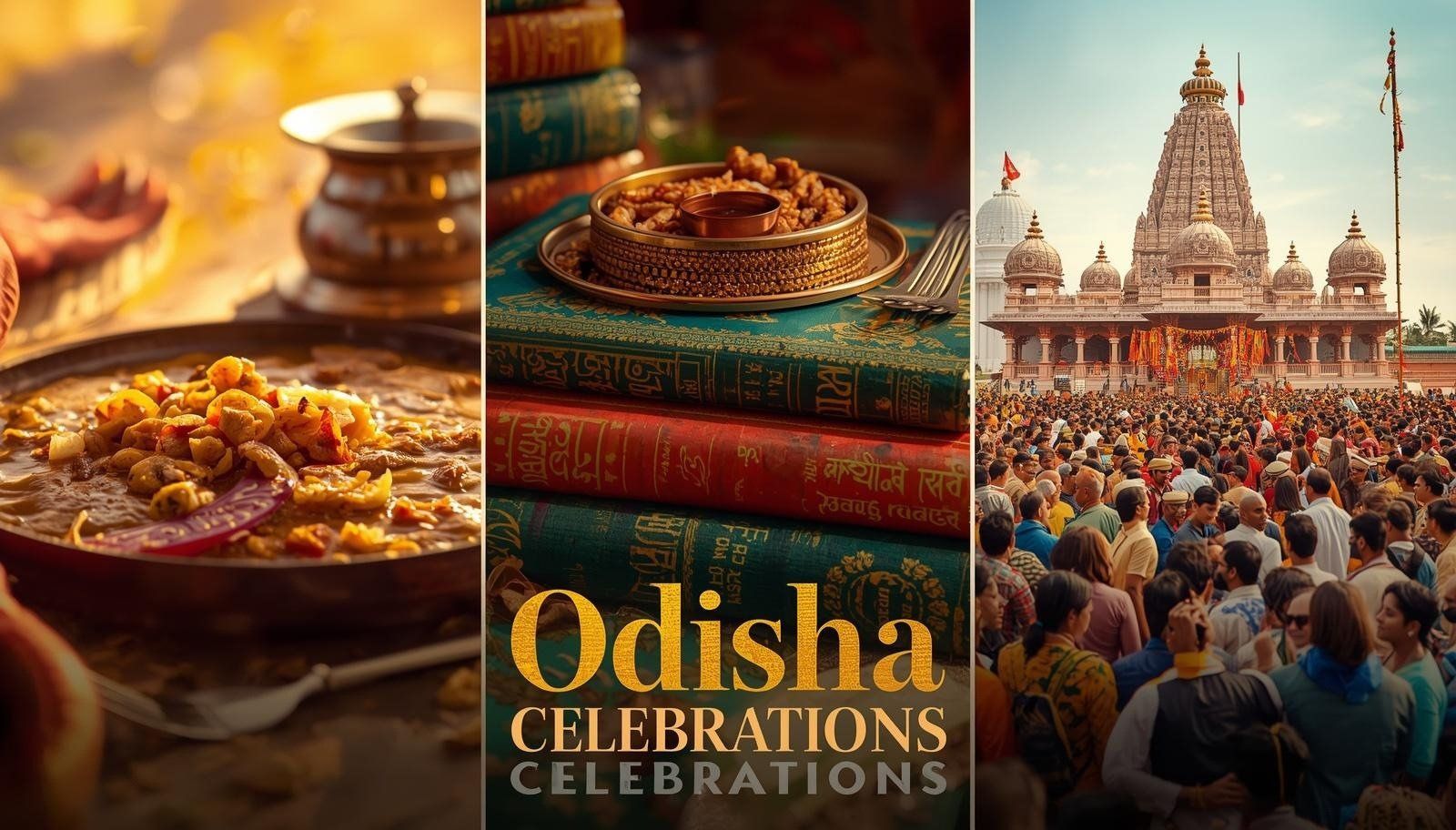
These are the “Classical Odia Language Day”, the “Pakhala Dibasa”, and the “Come, Let’s Buy a Book Movement”, celebrated on March 11, March 20, and April 9, respectively. Odia Classical Language Day celebrates the accord of classical language status to Odia, Pakhala Dibasa celebrates the common people’s traditional dish of fermented rice, and the Come, Let’s Buy a Book Movement calls upon people to buy Odia books. The last of these was part of the Odia Paksha (Odia Fortnight) 2026 celebrations. The State Government launched this event to celebrate Odia linguistic and cultural identity, sensitize people to achievements in the fields of language, art, and culture, and promote the use of Odia in daily life. It began on April 1, known as Utkala Dibasa (Odisha Day), and ended on April 14, the Odia New Year Day. On April 1, 1936, Odisha became a separate province on a linguistic basis. Utkala Dibasa commemorates this.
Celebration of the Odia Paksha is a commendable initiative. This year, many events were organized on a wide variety of themes: from traditional Odia dress and cuisine to cleanliness of school environments and public places, to education in the Odia language, to children’s literature and storytelling as a pedagogical strategy, to the contribution of some eminent Odias to Odisha and to the Odia language. To the best of my knowledge, the contributions of Pathani Samanta, Binod Kanungo, Gopala Chandra Praharaj, and Pandit Gopinath Nanda Sharma were hardly mentioned. Pathani Samanta was a globally famous naked-eye astronomer. Praharaj prepared a monumental dictionary containing 185,000 entries, and he was surely one of the pioneers of comparative lexicography in our country. Gopinath Nanda Sharma was arguably the first Odia modern linguist, a lexicographer, and he did very important and influential work on Sarala Mahabharata. His study of Sarala Mahabharata is a significant contribution to comparative literature. True, knowledge-based scholarly works do not touch people the way imaginative writing does, especially in the technical fields of grammar, lexicography, and science, etc., but knowledge-based literature, without doubt, contributes greatly to the intellectual enrichment of society and deserves people’s attention and support. One hopes that organizers of Odia Paksha 2027 will consider this.
This year, the Pakhala Dibasa celebration has received more coverage in Odia newspapers than ever before. The best-selling newspapers published informative articles and editorials on pakhala. Traditionally known as the poor people’s staple food, it has acquired much respectability in just fifteen years. From an article in “The Samaja”, we learned the names by which this dish is known in Assam, West Bengal, Kerala, and Tamil Nadu, among others, and the names of different types of pakhala in Odisha, and the way these dishes are prepared. It is worth noting that the pakhala dish named “ghia pakhala (ghee pakhala)” is prepared for Lord Jagannath alone in the sacred kitchen of the Temple. It is not prepared at home. The article informs us about many mouth-watering vegetarian and non-vegetarian side dishes eaten with pakhala. Many newspapers carry pictures of pakhala and the side dishes. Everyone knows that eating pakhala is an excuse to eat these vegetarian and non-vegetarian foods on celebratory occasions.
The celebration at Pantha Nivas, Bhubaneswar, an OTDC (Odisha Tourism Development Corporation Ltd) hotel, was very special. Pakhala Dibasa celebration has always been a one-day event. At Pantha Nivas, it was celebrated over two days this year. On the first day, a lecture-cum-workshop was held, in which experts spoke on the medicinal value of this dish, the dish as part of Odia culture, the making of this dish, etc., and, very importantly, the marketing of this dish abroad. The idea of making “fusion style” pakhala with a non-native touch was floated, reported “The Prameya”, one of the leading newspapers. The non-nativity would be in taste and in language, as in “orange-mandarin pakhala”. But one is sceptical about the marketability of this dish. Odias will most likely find it an esoteric dish. They might have it in some hotel once in a while just for a taste, but they will certainly not make it part of their food. This observation would hold for all Odias, living in Odisha or outside. Like me, many Odia visitors to England like “Fish N Chips”, but none make it part of their regular food at home. As far as I know, no restaurants in Odisha make this dish. Clearly, there is a need for more thinking and planning to sustain the marketability of the “fusion style” pakhala. Writing and reading about food inventions is always a pleasure, but selling them is another matter.
Returning to the luxury pakhala dish, with a variety of side dishes, vegetarian and non-vegetarian, which was a feast for the eye, was consumed with much glee on the second day of the celebration at Pantha Nivas. The participation of the Chief Minister, senior cabinet ministers, and many eminent people of Bhubaneswar in the celebration made it a very prestigious and glamorous event.
A news report in “The Prameya”, titled “Duryodhana Mousanka Pakhala Kansa (copper vessel of pakhala of Duryodhana Uncle)”, published on the Pakhala Dibasa, invited attention. The picture does not show the celebration pakhala dish, but the home pakhala dish. It also shows the bare-bodied, ageing Duryodhana and his wife working in their straw-thatched shop in Satyanagar, Bhubaneswar. Labourers and poor people are his clients. He sells them pakhala with humble side dishes at a reasonable rate and feels contented when his clients are happy after their pakhala meal. If the Pakhala Dibasa cultural event at Pantha Nivas is a grand celebration of a much-valued traditional Odia dish, the report on Duryodhana’s pakhala is a moving celebration of service to the poor.
Turning to the celebration of Odia Classical Language Day, it presents a contrast to the celebration of Pakhala Dibasa in terms of style, involvement of people in power and authority, and newspaper and television coverage. I am told that the State Government had directed the educational and language research institutions to celebrate the Day. The language institutions celebrated it, and the celebrations were generally in-house, as far as I know. Probably, the Centre of Excellence for Studies in Classical Odia was the only language institution to hold a one-day seminar on the occasion, with the participation of scholars from outside the Centre, and publish a souvenir. Now, this contrast with respect to the celebrations of Pakhala Dibasa and the Classical Odia Day is not at all unexpected; pakhala touches the lives of the people of Odisha at the day-to-day level in a way that the classical status of their language does not.
Come, Let’s Buy a Book Movement promotes the buying of books written in Odia. It is a laudable initiative, but the movement has to go beyond the symbolic. For that to happen, certain matters must be taken into account. Merely buying books would not serve the purpose; the buyers (and the book borrowers) must read them. One way of making it happen could be to set up, with full State funding, public libraries throughout the State, where people can read books for free, and the existing public libraries, many of which are almost non-functioning, must be revitalized with State support. The government must buy multiple copies of carefully selected books for public libraries.
Now, it is not the case that people are not reading, despite smartphones and YouTube. Not at all. Some bookshop owners in Cuttack, Bhubaneswar, and Puri tell me that people of all age groups buy more books written in English than in Odia. It is imperative to make a careful study of this phenomenon. Outside the textbooks, what books do they read—fictional or non-fictional? Especially the young. My guess is knowledge-based books mainly. If so, such books in Odia must be written, which would give the English books meaningful competition. As for me, at least, I am very optimistic about Odia books.
(The views expressed are the writer’s own)
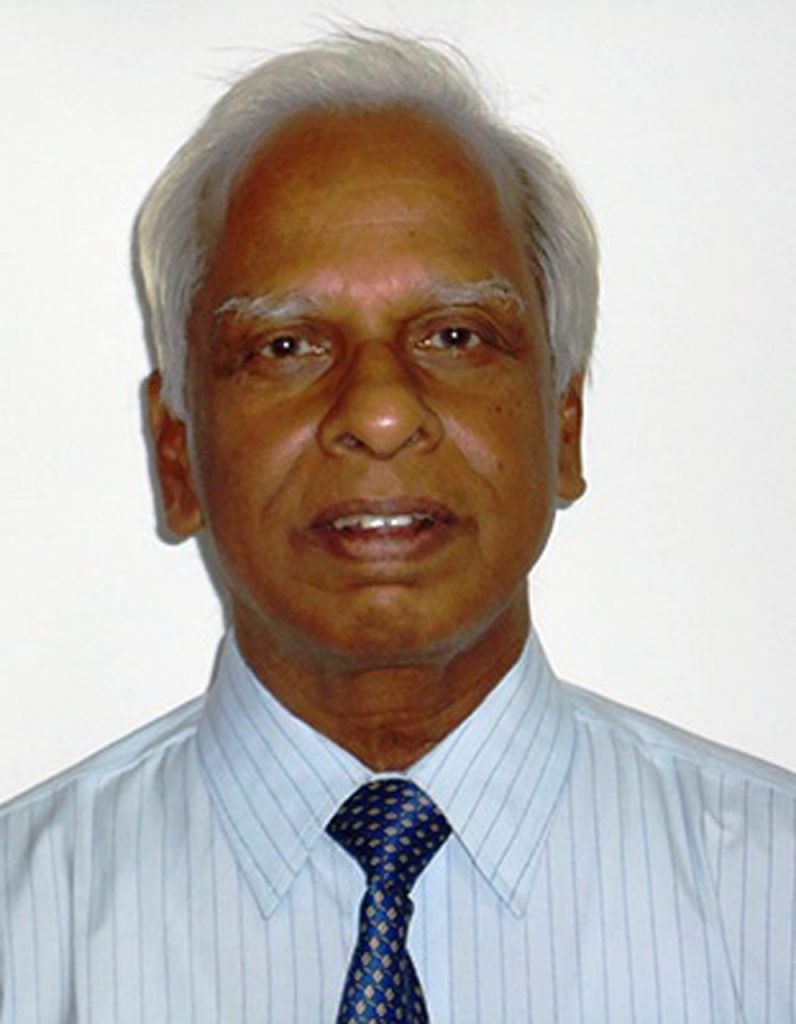
Prof. B.N.Patnaik
Retd. Professor of Linguistics and English, IIT Kanpur
Email: bn.patnaik@gmail.com
(Images from the net)