


As we all know, ours is a multilingual country. The languages spoken here belong to four different language families. Of these, twenty-two are “Scheduled” languages, eleven are “Classical” languages, and numerous underprivileged—“unsafe”—languages, in the UNESCO terminology. Almost all of these do not have a script. We are concerned with the last category of languages here.
Linguists and language activists assert that it is very important to preserve and promote this linguistic diversity. It is a politically, socially, and emotionally correct position to take. The Government of India supports the idea of preserving and protecting this diversity, where the expression “preserving and protecting” applies mostly to the unsafe languages. In this context, it is necessary to keep in mind UNESCO’s emphasis on documenting and preserving languages spoken by fewer than 10,000 people. It must be noted that there is no mention of revitalization as an objective here. Revitalization is about reviving an extinct language. One might think that there may be some logic in this. Doesn’t the question of revitalization arise only when the protection projects fail? So, why let such a situation obtain at all?
Incidentally, the protection of languages contributes significantly to the protection of cultures, since language is a major carrier of culture. In the case of the languages spoken by a small number of people, in particular, when the language, which does not have a written form, becomes extinct, the associated culture soon becomes extinct as well. The most optimistic view could be that it will survive for just a generation or two. Without a written form, it leaves nothing for the future. If someone wants to know about the culture of the speech community which has lost its language, he (she/they) will have nothing to look for.
The focus of UNESCO’s International Language Day, 2025, was on the preservation of underprivileged and threatened languages. It sounds like a lofty moral objective, but it must include more content to really be so. Preservation of these languages is pointless unless there is commitment to their promotion. In this context, “promotion” means that these languages are enabled to be used at the initial stage of education and as the language of adult functional literacy. When adults learn the language, they become teachers of their language at home for their school-going children. Preventing marginalization, rather than solely focusing on preventing extinction, has to be the objective of the project for underprivileged languages. Among other things, this would be an effective solution to the serious problem of reaching speakers of unrecognized languages (i.e., languages spoken by fewer than ten thousand people) in their own languages during crises, say, when a disease such as cholera, flu, malaria, or dengue breaks out. The speakers of these languages must be able to read the information provided to them in their own language in the form of leaflets, pamphlets, etc., which describe the problem, mention preventive measures that they can take, and explain what they can do if they are affected by the disease. It is very important to appreciate that a marginalized language would remain marginalized and consequently unsafe unless empowered.
Empowering them is a matter of political will and clear thinking about an implementable plan of action. Language experts can contribute to the latter. A language is underprivileged not because of any inherent flaw in it, but because of circumstances. For instance, if a speech community has lived in isolation all along, it is not because of the choice of its speakers. If the language concerned has remained a spoken language, it is not because its speakers have wanted it to remain so. Most likely, they would not even know the advantages of a written language over a language that has no written form. All languages possess equal potential for development. The difference between them in terms of their expressive power is a consequence of the varying community needs and historical accidents, not, to repeat, inherent weaknesses.
Developing such languages for performing functions in day-to-day life, as mentioned above, is mainly about devising or adopting an existing script for the language, increasing the vocabulary, and working out a style of writing as against the style of speaking. The surest way to promote an underprivileged language is to use it for the early stage of education. Now, mother tongue education requires no justification; education must be in the child’s native language. Any deviation from it needs justification. There is general agreement among language pedagogists on the necessity of mother tongue education. In reality, however, mother tongue education has been reduced in our country to education in the standard variety of the State’s main language. On this account, children whose mother tongues differ from this do not enjoy the benefits of mother tongue education. In this context, it is very heartening to know that the Central Institute of Indian Languages (CIIL), Mysore, has prepared one hundred and twenty primers for such languages. It is an important first step towards empowering our underprivileged languages.
Now, is diversity, as assumed here, indifferent with respect to what we do with it? Doesn’t it create its own problems? As we think about it, we realize that it indeed does. What could, then, be an efficient and implementable strategy to manage diversity? This, let us leave for another day.
(The views expressed are the writer’s own)
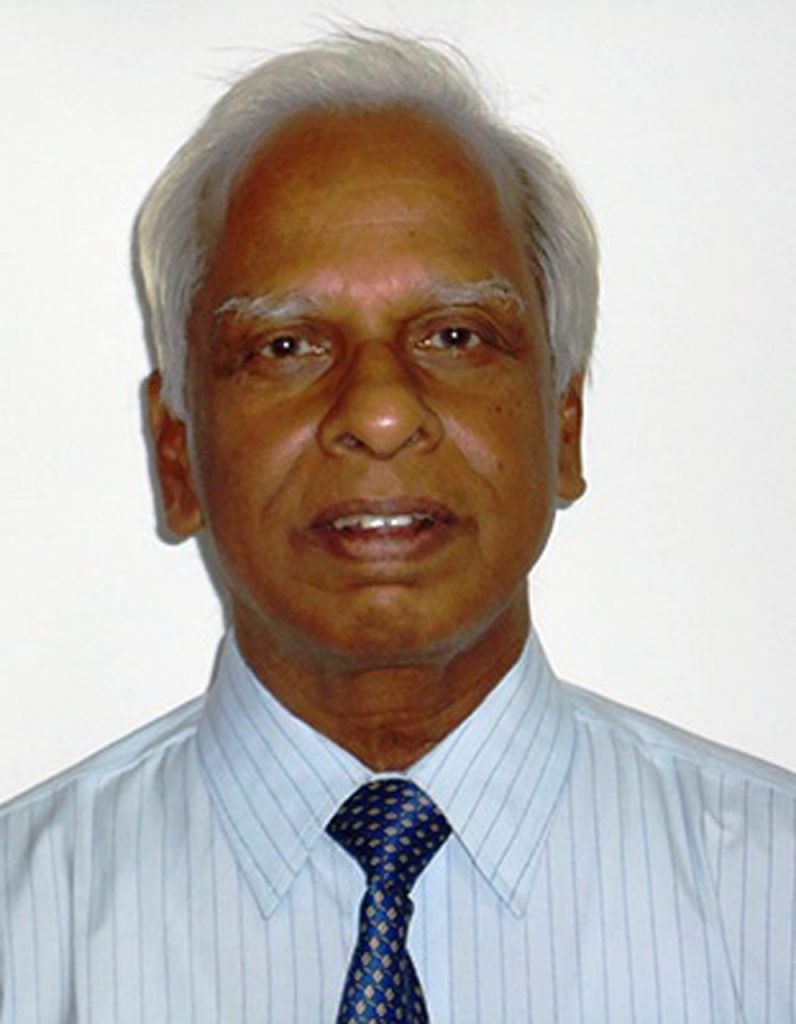
Prof. B.N.Patnaik
Retd. Professor of Linguistics and English, IIT Kanpur
Email: bn.patnaik@gmail.com
(Images from the net)