

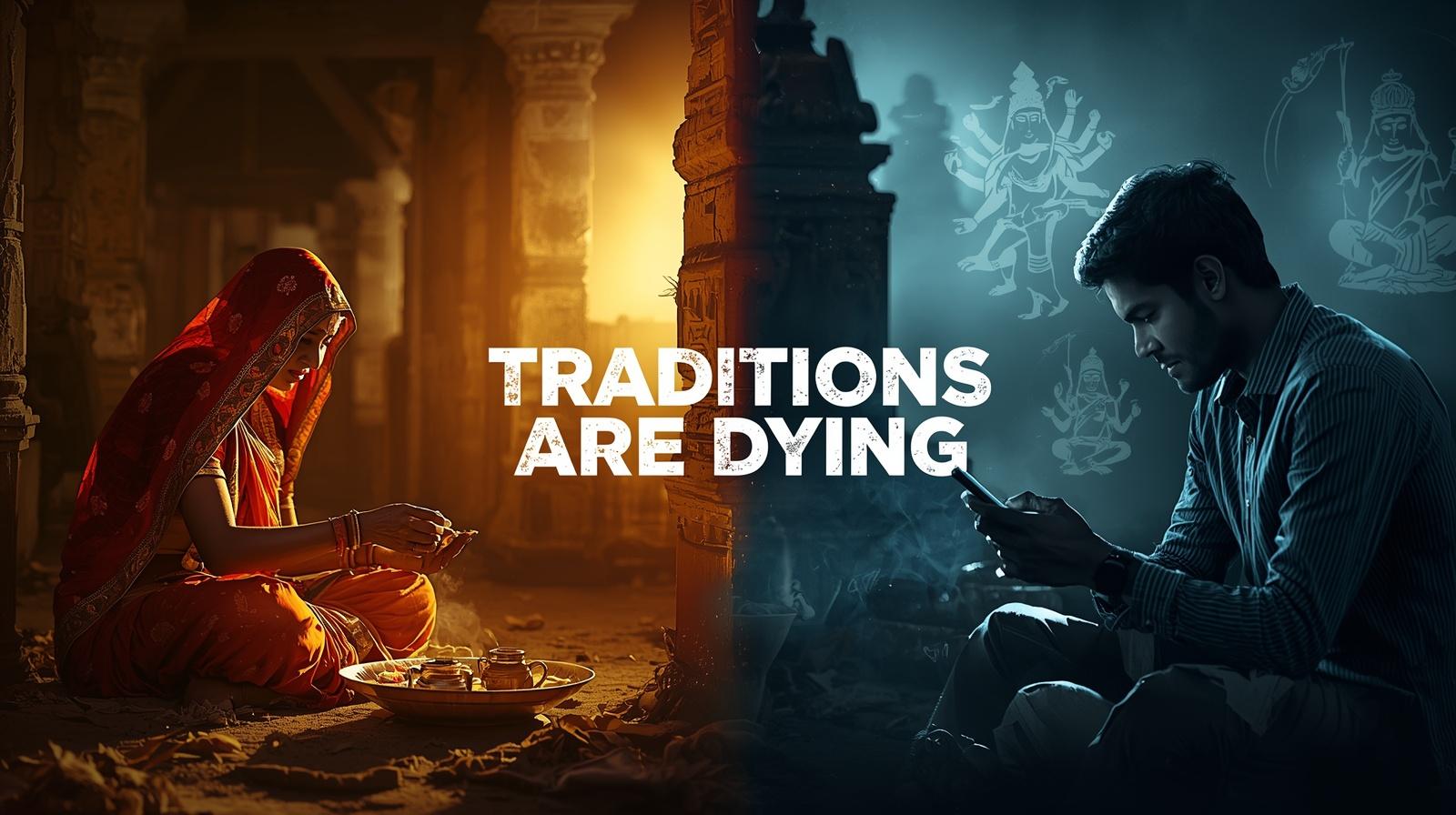
I often visit rural areas as most of my relations live there. Basically, most of us are from rural areas, although we have made our base in cities. Recently, I had been to my maternal uncle’s village, which is approximately twenty kilometres from the city. While sitting in the drawing room, the wife of my uncle’s son brought tea for all of us. She was carrying cups of tea in a tray and serving everybody. But she did not serve me tea and just kept the tray near my chair so that I would pick up the cup myself from the tray and sip it.
At first, I was surprised as to why she was doing it. When I enquired about it, my uncle said that since she is the wife of my cousin brother, she should see to it that she does not touch my body. Had she handed over the tray to me with a cup of tea, it would have been as good as touching my body for her.
In western Odisha, husband’s elder brother is called ‘Dedhsasur’ and in other parts of Odisha mostly ‘Dedhasura’, and it is a very dignified and prestigious relationship for any woman. She does not directly look at his face or into his eyes and always keeps herself under cover whenever he comes before her. She does not even utter his name. I was aware of the practice. But I was surprised at the sight of rural women following age-old practices with dignity to the extent of even distancing a tray carrying cups of tea.
We can have another example. In Odisha, women are not allowed to utter the names of their husbands. If husband’s name is ‘Lal Mohan’, she will not be allowed to utter the name either wholly or separately. She is also advised to avoid words sounding similar to or like ‘Lal Mohan’. The practice can be seen in both urban and rural areas, though in urban areas it is on the wane.
Long back, I was travelling with an elderly lady on a rickshaw. Suddenly, I saw her covering her face with ‘Odhani’. Moving my face around, I could see her husband at a distance moving towards us. I have even seen certain women covering their heads up with ‘Odhani’ while talking to their husbands even on telephone.
Husband and husband’s elder brother are only but two relationships which carry dignity and prestige. There are numerous other relationships too which carry weight. Father-in-law, mother-in-law and other senior relationships have always been respected in society. Though not strictly restricted, women prefer to avoid uttering the names of their in-laws and other senior relationships.
Not only with respect to relationships, rural India also boasts of our tradition. As a child, I remember having moved from door to door on the occasion of ‘Pushpuni’ and begged for alms called ‘Chherchhera’ along with relations and friends. Actually, this is not alms in the true sense of the term but some sort of gift from households. The logic is that after the harvest every household is full of crops to be gifted away to the needy.
‘Pushpuni’ is a festival of joy and merry-making. Though it is still remembered and celebrated in urban areas, the practice of Chherchhera is gradually withering away. Three to four years ago, I had seen some boys asking for Chherchhera, moving from door to door in our locality. But the scene is totally out of sight now.
The practice of keeping a pot of water at the door whenever a guest comes to the house can still be found in rural areas, though in urban areas it is maintained by only elderly ladies. The practice is definitely scientific and hygienic as the guest coming from outside must wash his hands and feet before entering the house.
The tradition of worshipping the village deity or Gramadevi by the Jhankar or the village priest on important occasions like Nuakhai is slowly withering away and after some time will totally vanish from the scene unless and until the new generation takes interest in it.
Our country is out and out traditional and the silver lining is that most of it has still survived in rural areas, contrary to a degradation of values in urban areas. There are still so many practices prevalent in rural India which have enlivened our tradition.
What I have observed is the fact that senior and elderly ladies who are residing with families in urban areas have made it a point to stick to our tradition, and after them, unless and until the new generation takes special interest in it, everything will go astray.
The situation is definitely deteriorating day by day as far as staying away from our tradition is concerned. We must not forget that the institution of marriage and devotion to one man and one woman can always protect us from the ferocity of AIDS. Whether AIDS was present in ancient Indian society does not matter, but we can be sure that our forefathers were aware of a danger in future to mankind. Hence, they put stress on the importance of single relationship.
The present scene is really gruesome. In recent times, very strange incidents have been taking place in our area. Newly married grooms and brides have been eloping with their respective lovers even after marriage and sometimes leaving infants at home. It is not for nothing that our forefathers have put stress on the importance of social and familial relationships.
Women not allowed to utter the names of their husbands and look into the eyes of their husbands’ elder brothers has been a practice strengthening very much the sanctity of relations. But today, they are not only taking their husbands’ names but also playing jokes with their husbands’ elder brothers. This has told upon the dignity of relations, thereby leading to stray incidents.
Though the situation is going from bad to worse and there is the least hope for improvement, yet if we stick to our tradition and follow in the footsteps of our forefathers, there are chances that the situation may improve for the best.
(The views expressed are the writer’s own)

Mr. Prafulla Kumar Majhi,
Retired Asst. Director, A. I. R, is an eminent Scholar and freelance writer in English & Odia. His areas of interests are sociocultural, economic, literary, historical and analytical studies and writings.
Email: airprafulla61@gmail.com
Mobile.9861007190