

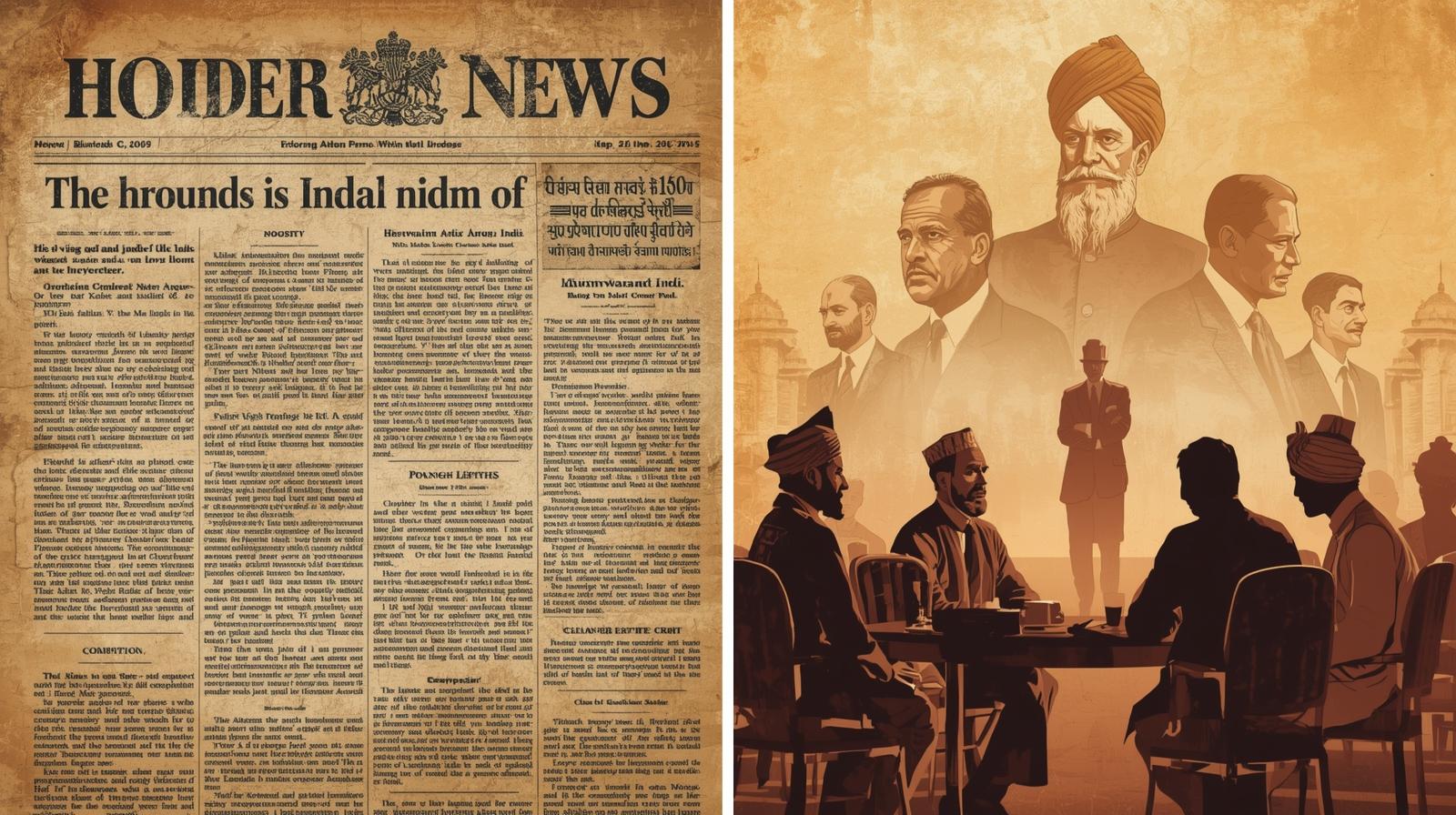
In the third-earliest Odia newspaper The Utkal Dipika, on 1.9.1866, there is this opinion piece article, with the title “‘Odiamane swabhabatah nirbodha’ ehi prabada jathartha ki na (Odias are, by nature, stupid – is this saying justified or not).” This opinion about the Odias is attributed to the foreigners. The foreigners in the context of the time were clearly the Britishers. They observed, the write-up says, that however hard one tried to train them, the Odias simply could not learn anything well. One might think that because they were the rulers, their opinion was taken as generally correct, especially by the linguistic neighbours of Odisha. And we know that slighting by the prosperous neighbour can be hurtful and demoralizing. Incidentally, the write-up does not mention in which specific tasks the Odias were found by the Britishers so incompetent.
The piece observes that their view of the Odias was grossly ignorant. It says that in the past, the Odias had excelled in various fields: from poetic composition and scholarship in the shastras to martial arts, architecture, and sculpture. The same could not be said about Bengalis, it says. It kind of concedes that in the mid-nineteenth century, the condition of the Bengalis was a good deal better. They were considerably more prosperous and more developed.
Lack of patronage was the predominant reason for the Odias’ present state, the write-up observed. The British government spent a lot of money and effort for the development of Bengal, but they ignored Odisha. Education in Odisha was completely neglected, as was Odia language. For instance, textbooks were written in Bengali on many subjects: literature, mathematics, geography, and physical sciences, although these were translations and not original works, but there were none in Odia. Odia was not the language of education in the Odia-speaking regions (Odisha was not a separate state then), and for this, the government was responsible.
To turn to another example of the neglect of Odisha: when many trains were introduced in Bengal, even for short distances, there were none in Odisha. The government dug canals in Odisha, but there could be no comparison between trains and canals as far as transport is concerned. Now, it was not just the government. Those Odias, such as kings, zamindars, and other affluent persons, who could contribute significantly to the development of the fellow Odias, did not come forward to help. This was very unlike the Bengalis. In any case, because of this neglect by both the government and its own people, Odias had lost their creativity and the sharpness of their intellect.
It may be noted that this write-up does not answer the title question about the stupidity of the Odias. That was not its purpose. The purpose was to bring to the attention of the government and the people of Odisha the neglect that Odisha was suffering and demand affirmative action in this regard.
Reading this opinion column, I was reminded of a short essay entitled “Are We a Corrupt People?” by the eminent writer and social thinker Khushwant Singh. Written in 1982, it occurs in On India, a collection of his short essays, edited by his daughter, Mala Dayal. Singh says that post-Independence, “We have established a black record of corruption.” He goes on to say, in a matter-of-fact tone, how every single profession is tainted and how no one, “the rich and the poor, the upper castes and the lower, the educated and the illiterate,” can claim to be unaffected by it. Appointments are made to jobs and positions on considerations other than merit. In sum, corruption has become a way of life. He puts the matter in a historical perspective, saying that corruption in Indian society is not a new thing; it was very much there in the past as well. It had and still has various forms: ritual gifts and nazarana to the powerful and the rich, black marketing, food adulteration, and the like.
To deal with corruption, says Singh, the government has set up vigilance units, special structures in the police departments, enacted anti-corruption laws, and the like, and whenever needed, enquiry commissions were set up. But corrupt practices have gone on unabated. And there are far too many corrupt people for the law courts to deal with.
The author is concerned about the prevalent state of affairs and concludes his essay, observing that it is only social will and social action that can deal with the problem of corruption, a social problem, effectively.
Now, unlike The Utkal Dipika opinion piece, which does not answer the title question, Khushwant Singh’s essay does, indirectly but very clearly, however unpleasant his views might appear to the people. Each of these clearly articulates the problem it is concerned with, and each says what would constitute the most effective solution to the relevant problem. And both say that society has an important role in improving the state of things.
(The views expressed are the writer’s own)
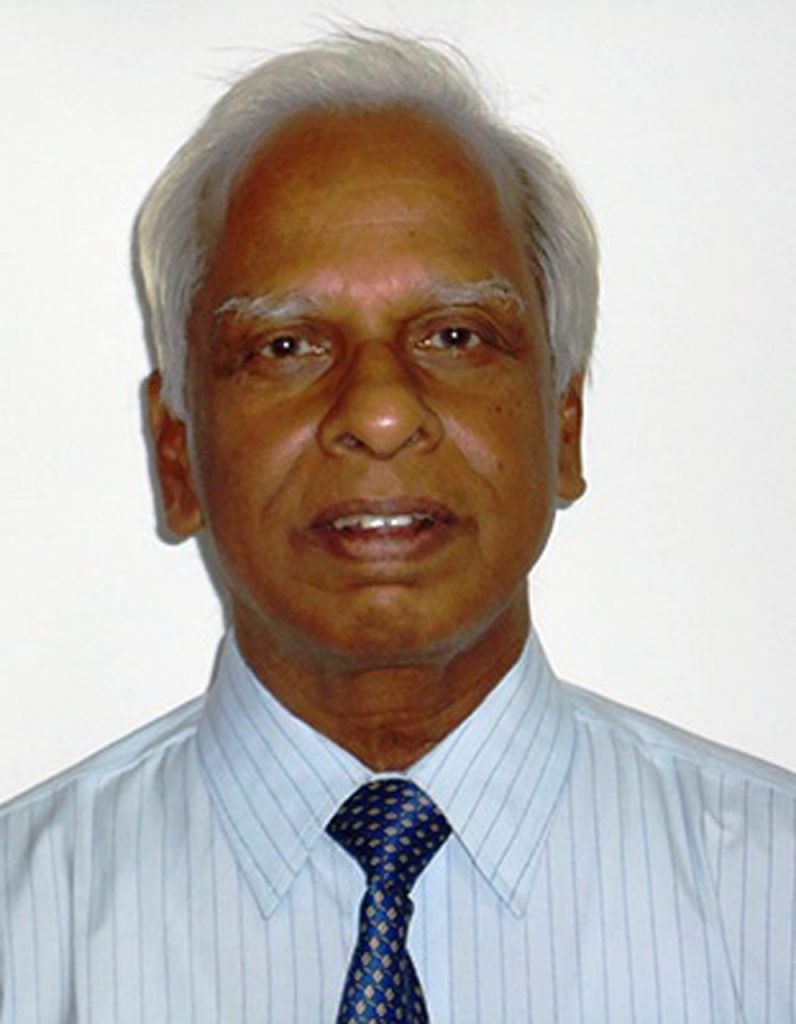
Prof. B.N.Patnaik
Retd. Professor of Linguistics and English, IIT Kanpur
Email: bn.patnaik@gmail.com
(Images from the net)