


I Asked my five-year-old grandson some years ago, when I was writing on my laptop. “My father does not read what you write. Mami does not. I am not going to read either,” he said. I told him that I was writing for him. “You will read what I write when you grow up,” I said. “I will not,” he said, in a tone of finality.
This is a good example of saying one thing, meaning another. In terms of Ancient Indian theory of meaning, this is the vyanjana meaning of his utterance. He wanted my laptop. He knew that if he asked me for it, I was unlikely to give it. He thought writing was for others to read. He thought my readers were only his parents and himself. So, if I realised none of them would read my writing, I would stop writing. Then, I wouldn’t use the laptop for long hours, and he could have it. He believed I wouldn’t suspect that what he meant was not what his words said.
Saying one thing and meaning another, let’s call it “indirect speaking”, to distinguish it from “indirect speech”, is a sophisticated conversational skill. Besides grammatical and lexical knowledge, it requires world knowledge, an understanding of the hearer’s nature, commonsense reasoning, and, most importantly, communicative intelligence, which determines that the speaker chooses this strategy over “direct speaking” to achieve his objective. One uses this communication strategy for various reasons, including getting work done without arousing the hearer’s suspicion that the speaker has an ulterior purpose. The development of this knowledge, “pragmatic knowledge” as linguists call it, in a child with some tutoring by mainly parents and teachers would interest language acquisition researchers and cognitive psychologists, among others. Now, when we, laymen, find a five-year-old child using this speech strategy with conviction, we say with wonder, “What a piece of work is the human child” (with apologies to the immortal Shakespeare for taking liberty with his line in “Hamlet”)! What adds to that sense of wonder is that, in this specific example, my grandchild’s narrative to achieve his objective was entirely his own, without any external help. No one in my family told him they didn’t read my writings and wouldn’t read them in future, etc. He had figured out what I was by making sense of his experience with me, using knowledge gifted by nature. This is an ability children develop on their own, as suggested above. It looks like creating stories is natural to a child.
By the way, if adults see through the child’s “indirect speaking” and easily figure out what he meant, it is because they have a vast and complex world knowledge and, as a result of extensive interaction with others, they have a much better understanding of human nature.
Now, “Why do you write?” is not an adult question. In a way, it translates into (not intentionally, though, by the asker) “Do people read your books? Do your books sell? Who do you write for?” and the like. When the adult members of my family asked me these questions, I told them that my books don’t seem to sell well, as my publishers tell me. As for whether people read them, I knew that at least a few did. And as for who I write for, I said I had never really thought about it. They were surprised and a bit disappointed when I told them I don’t write for any specific category of readers. “The book is there for anyone interested in personal essays—whoever cares to read it will read it,” is what I told them. They said if, instead, I had a fairly defined readership in mind while writing a book, it would have a market. There is certainly some sense in the position that if a book has no use, so no readers, there would be little point in writing it.
After this conversation with my family, I asked my publisher in Bhubaneswar how my book was selling. He didn’t say anything encouraging about sales, but he added, “It’s not just your book; it’s the situation with most books. This is the experience of most of the publishers here.” He said that not many are reading books these days. They prefer YouTube. Those who still prefer reading books like to have soft copies; storage isn’t a problem, and they can read books during air travel or a car journey. For me, the question has always been not how many people buy one’s books but how many people read them, and it is always more comforting for an author to imagine that there indeed are people, maybe just a few, who read his work. In any case, I haven’t lost sleep over the unencouraging sales of my books.
By the way, my publisher told me that the books selling these days are autobiographies, travelogues, Odia culture and cultural products and practices, Odia cuisine, textbooks and other pedagogical material, general knowledge books, and books on computer technology written in Odia. Mine, incidentally, was a book of personal essays written in English.
The other day, a good friend from my college days, a well-known physicist who has superannuated from a reputed university in the US, dropped in. We met after about sixty years and had much to talk about. Somehow, book publication and sales sneaked into our talk. Sales cannot be ignored for certain categories of books, he said. If, say, a textbook, a dictionary or a coffee table book didn’t have an encouraging sales figure, the author (and the publisher) would be genuinely concerned, he said. The same would hold for popular fiction, books on some contemporary social or political issues for general readers, or even popular science and technology books. Now, the best works of literature are not always bestsellers, just as the best football team doesn’t always win the World Cup (remember Brazil in 1982 and 1998?). Regarding dictionaries, pedagogical grammar books, etc., the best are almost always the bestsellers.
For me, the interesting question is not why one writes, unless one has an autobiographical interest in the writer, but whether one should write. My unhesitating answer is “Yes”. There is much to write to justify my answer, but let me leave that for another piece. All I want to say now is this: one should write not just to escape from one’s personality (with apologies to the great T. S. Eliot for taking liberty with his statement on writing poetry) but also from one’s little world.
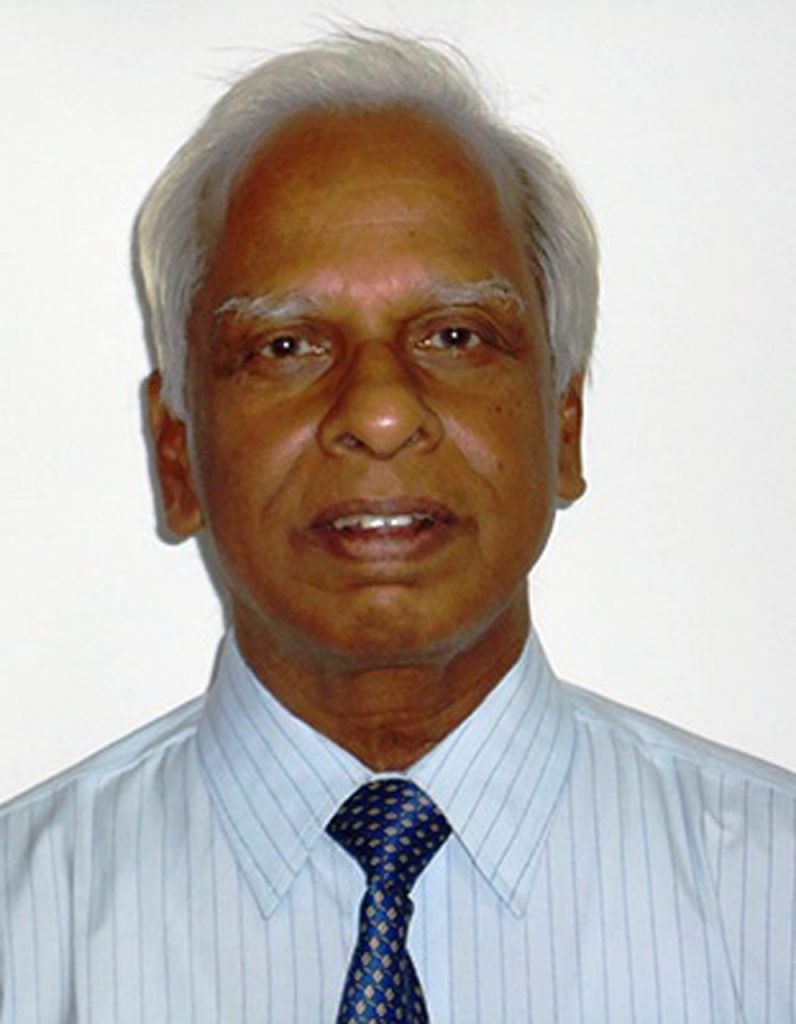
Prof. B.N.Patnaik
Retd. Professor of Linguistics and English, IIT Kanpur
Email: bn.patnaik@gmail.com
(Images from the net)