

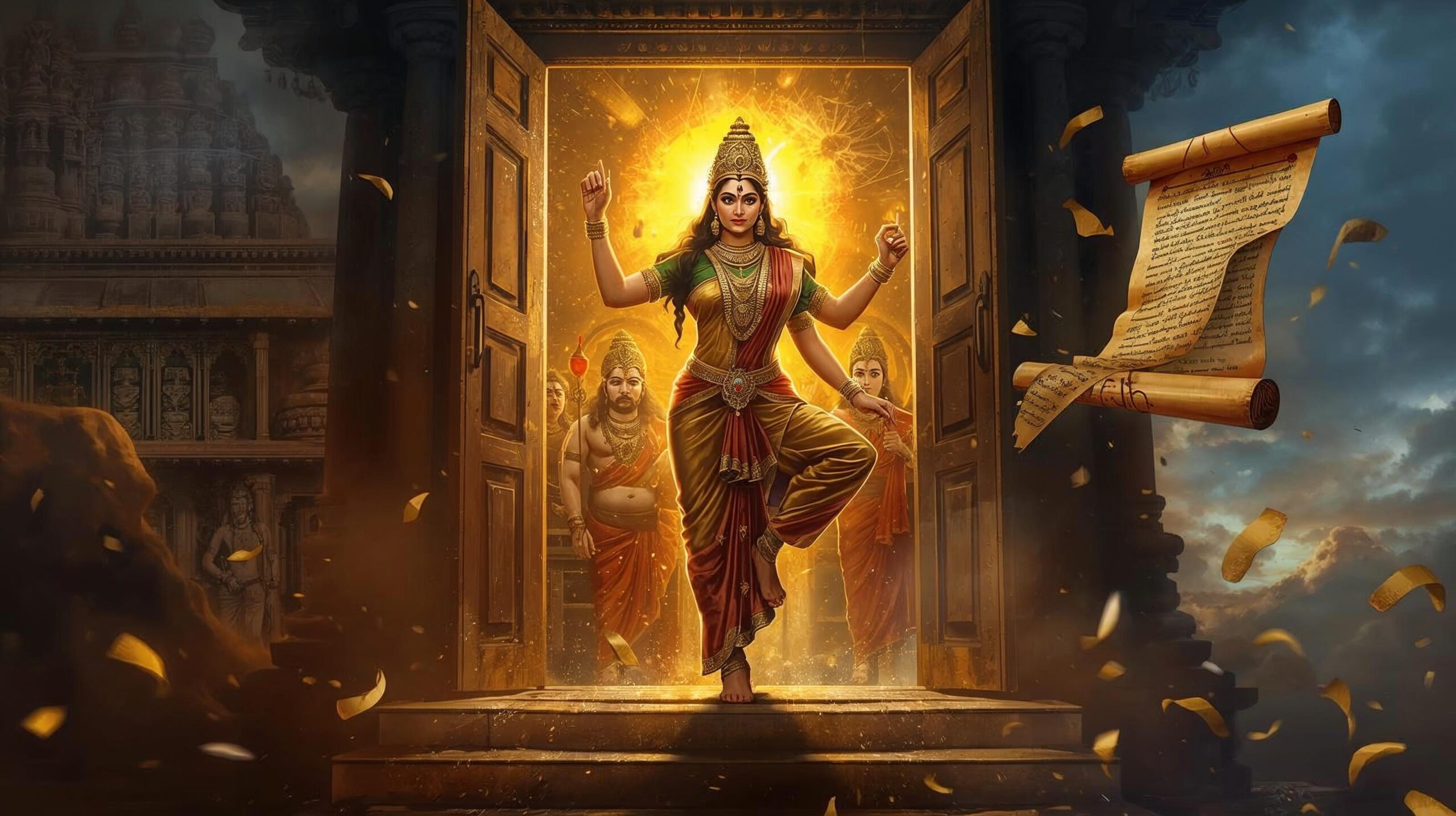
The Moral Code, about which this piece is, is outlined in Lakshmi Purana, generally considered a revolutionary work for its opposition to the caste system. Here we draw attention to a different matter.
Lakshmi Purana was composed in the sixteenth century by the great Odia poet Balaram Das. It is not his best, but his most popular work. Come the month of Margashira, on every Thursday, in thousands of homes in Odisha, this Purana is recited. The Code enumerates what the woman, especially the married woman, must do and must not do on Thursdays, amavasyas, and sankrantis, and what both men and women must not do on any day.
The Code mentions the “don’ts,” and the “do’s” have to be inferred from the “don’ts,” which is an economical way of listing the latter. A list of constraints would always be shorter than the list of allowables. For instance, if someone has to specify what food to take on a particular day, it would be more economical to say what foods to avoid than what to eat: “eat everything except these.”
The Code is concerned with food, its wastage, and food-related pollution, cleanliness, orderliness, family duties, decency, and respect for culture and tradition. It forbids women from eating non-vegetarian food, meat cooked in bottle gourd, roasted food, leftover food, or burnt food on Thursdays, the day of the goddess Lakshmi. On this day, they must not fry raw rice to make lia. They must not beat children. Now, children have to be disciplined, raw rice has to be fried, and spoiled and burnt food cannot always be thrown away, but these things must be done on other days.
Both men and women are forbidden to eat rice with curd at night, and on Thursday, amavasya, and sankranti nights, one must not take food at all. One must not eat facing the south or the west, nor must one eat sitting on the floor without something to sit on, like a mat, for example. This emphasis on food may be due to the traditional belief that food determines one’s state of mind and nature.
Not washing one’s face in the morning, not washing one’s face after eating, taking food without washing one’s feet, and applying oil to the body after bathing are among the forbidden. So are sleeping on a crumpled bed and sleeping naked. Sexual discipline is an important part of the code; sex is forbidden outside of wedlock and on certain days for a married couple. Women must observe traditional rituals and practices. And a woman must not be quarrelsome, lazy, unpleasant, and bold.
The most important part of the Code mentions the way the woman must treat her husband. For her, nothing is more important than serving him. No matter what religious acts she performs — going on pilgrimage, observing bratas, performing tapas, worshipping gods and goddesses — she acquires no religious merit if her husband is displeased with her. She must make her husband’s joys and sorrows her own, must always obey her husband, be pleasant in her dealings with him, and never get irritated with him.
In Lakshmi Purana, goddess Lakshmi, in the guise of a brahmin woman, said all these to a trader’s wife. Thus, Balarama Dasa legitimizes the Code by attributing it to the goddess herself. What is interesting is that in the second part of the Lakshmi Purana, the goddess flouts the same Code. In terms of the then social system, she was guilty of polluting herself and entering the sacred space of the kitchen without having a bath, and cooking for her family, thereby polluting the family.
She asked for a divorce when her spouse, Lord Jagannath, asked her to leave “Shri Mandira,” their home, where they lived with her elder brother-in-law, Lord Balabhadra, and sister-in-law, Lord Subhadra. It could be viewed as an act of boldness on her part. A woman must not be sahasi (bold), says Lakshmi Puran. Then she was guilty of cursing her husband and ensuring that her husband and her elder brother-in-law suffered hunger and humiliation while looking for food for twelve long years. She did not hesitate to resort to manipulations to achieve this objective. Granted that she had been grievously wronged by her husband, but avenging herself the way she did is not in conformity with the Code she herself had communicated to the trader’s wife.
When they reconciled, her husband requested that she return home. She said she would, on the condition that caste-based pollution must not apply to mahaprasad, the food she cooks for her family in Shri Mandira. She was within her rights to demand this, but would she qualify to be an obedient wife, according to the Lakshmi Puran Moral Code? I am, frankly, sceptical.
But there is not even a mild censoring of the goddess in the text. No one charged her with being an inconsiderate and cruel wife or of violating the Code. The text does not suggest that she, a goddess, was not bound by the Code, which was for humans. The characters were gods but behaved like humans; Lakshmi Purana is a human story. It also does not suggest that power legitimizes the flouting of a code.
On the other hand, the narrative highlights a drawback of the Code that specifies a woman’s duties and responsibilities to the family, but not her rights. Let alone specifying the rights, it would not even say whether she has any rights. The goddess’s protest was a corrective to the Code. The family must be sensitive to the woman member’s need for her own space, and her identity and individuality must be accepted and respected. The narrative supports the wife’s resistance against maltreatment in her family; in a way, it does more — it elevates the wife’s protest to the level of a moral duty. This is nothing short of a revolutionary idea when viewed in the context of the moral beliefs and practices in sixteenth-century Odisha.
(The views expressed are the writer’s own)

Prof. B.N.Patnaik
Retd. Professor of Linguistics and English, IIT Kanpur
Email: bn.patnaik@gmail.com
(Images from the net)