


The FIFA World Cup 2026 final was held on August 19. This piece isn’t about the matches; written from a personal point of view, it’s about some reflections on the grand event.
Let me begin by saying I became somewhat aloof from the tournament once my all-time favourite, Brazil, lost. And Brazil lost badly. It lost at the pre-quarter-final stage. Never had Brazil left the tournament at this stage. I am an ardent admirer of Messi and would have been happy had his team won the World Cup. But then I must say that the better team won the final. But nothing was embarrassing about Argentina’s defeat. It lost to Spain by the narrowest of margins and in the second half of extra time.
In this World Cup, I missed Suarez and Neymar (Neymar Jr.). Suarez had accepted that he was no longer the player he was. Neymar, a vastly talented player who holds the record for most international goals for Brazil, was beset by injuries and wasn’t fully fit. He played in two matches for Brazil and scored one goal from the penalty spot.
He called his international career a day. Cristiano Ronaldo and Lionel Messi announced that this was their last World Cup, as did Luis Modric. It was a forgettable World Cup for the Portuguese great. It was different for Messi. Only in the final did he have no impact. He won the Silver Ball and the Silver Boot; the former as the second-best player and the latter as the second-best goal scorer. He is among the nominees for the Ballon d’Or 2026 largely because of his performance in this tournament. The problem is that, in the long term, many might remember him for the final match. Unfair to Messi, but that’s the spectator world.
Among other greats, those who will not be seen at the 2030 World Cup are Luke Modric, Casemiro, Salah, Nicolás Otamendi and Manuel Neuer. They hardly figured in the retirement talk, which was dominated by Messi, Ronaldo, and, to an extent, Neymar. They will be remembered in the 2030 World Cup, but not missed on the field.
Based on their performance in the 26 World Cup, the players to watch in the 30 World Cup will include Kylian Mbappe, Erling Haaland, Yamal, Vinni, Ismaila Saar, Ismael Saibari, and then Harry Kane, who will be 37, so for him, one never knows! There will surely be new players – four years isn’t a short time for exciting players to emerge, trained by managers like Ancelotti, Jurgen Klopp, Zinedine Zidane, Luis Castilo, Thomas Tuchel and Lionel Scaloni, among others. Then who knows! José Mourinho may surprise and take charge of Portugal. In that case, following the Shelley logic, can it take too long for Guardiola to join the bandwagon?
To return to Messi and Ronaldo. During the World Cup, neither of them announced their retirement from international football. There must be others like them, but I have thought about it. Copa America will be held in 2008, and so will Euro. Messi and Ronald understandably did not want to miss it. Based on its latest FIFA ranking, Argentina has a good chance of winning Copa America. As for Ronaldo, his self-belief is amazing. He surely believed that he would have luck at Euro 28. He surprised football lovers by saying he placed the Euro tournament above the World Cup. There surely were not many takers.
A month after the World Cup, in the last week of August, Messi announced his retirement from international football. He said the time had come to build a new team with young players. Copa America 2028 is just a couple of years away. He put the team’s interest above his own – a decision that was admired by many. Many football viewers worldwide would have liked him to retire from international football after Copa America. Reacting to his retirement, Jose Mourinho said that Copa America and the World Cup will be “poorer” without him.
Incidentally, not everyone thinks Messi will not play in Copa America 28. He retired in 2016, but changed his decision and returned to play. World Cup 26 showed he was not a spent force yet, so he may be persuaded to return for Copa America 28 in the team’s interest. Who knows, he may revoke his retirement! In our opinion, however, it is extremely unlikely.
After Messi retired, a journalist is believed to have asked Ronaldo about his retirement plans. What he said is of no interest to us here now. Of interest is the timing of the question and the assumption behind it. Why should his retirement be linked to Messi’s? Messi scored a hat-trick in his first match in World Cup 26. Later, when Ronaldo scored in his second match in World Cup 26, he was asked about Messi’s goals – quite irrelevantly, one would say. But isn’t this what celebrity interviews are often about?
Now, with Messi’s retirement, the long football rivalry narrative between him and Ronaldo will start folding up fast. Football rivalries aren’t new: Brazil and Argentina, Real Madrid and Barcelona, and Manchester United and Liverpool, for instance, have long been rivals. But so far, the rivalry between individual players has been between Messi and Ronaldo. And so too the rivalry narrative. Discourse on who is the GOAT of football has been restricted to Messi and Ronaldo, individual players. There is no discourse on the GOAT of national teams or clubs. The Messi-Ronaldo rivalry discourse is not just about the players and their achievements, but also about what their fans said, what experts said, how they reacted to all this, and much else.
Now, football is interesting not just for the matches but for the talk about them. With Messi’s retirement, as already said, a discourse is lost. Readers of football writing and participants in football talk, as well as football journalists, linguists, scholars of conflict and conspiracy and general readers will miss this discourse.
The rivalry narrative is a media creation: football journalists write about it, create television debates, and do everything that promotes it. The narrative has sold very well. So, the discourse cannot be discontinued, because one narrative has ended. The framework is there now; only content has to be added. Characters need to be replaced. There were already indications of a new rival narrative during the World Cup: about Kylian Mbappe and Erling Haaland.
But creating this narrative will not be easy. They do not play in the same League, so there cannot be a comparison. Mbappe plays for Real Madrid in Spain, and Haaland plays for Manchester City in England. Sixty goals scored by a player in La Liga (Spain) do not translate into sixty goals scored by one in the English Premier League (EPL). The opposition is uneven. At the international level, France is more likely to play more matches than Norway. So, the figures for goals, assists, etc. will always favour Mbappé. Under the circumstances, comparisons between these two outstanding players will be unpersuasive.
Now, as an end note, can the Messi-Ronaldo rivalry be revived after, say, three or four years? Let’s imagine a situation where both will be managers. Then they could be rivals again, and a new chapter will be added to the narrative. José Mourinho and Pep Guardiola were seen as rivals. But only so long as they were managers of two top teams in the same League, La Liga. At least I can’t see Messi and Ronaldo managing top teams in the same League, not at least in the near future. There will never be an addition to their rivalry narrative.
(The views expressed are the writer’s own)
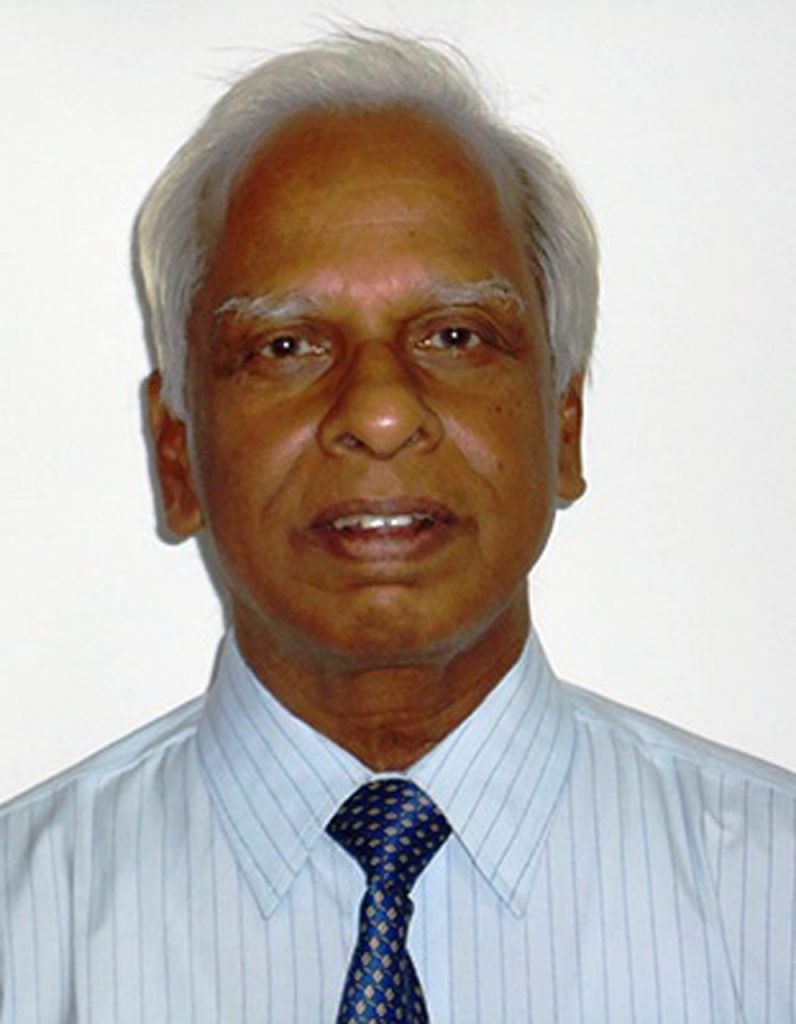
Prof. B.N.Patnaik
Retd. Professor of Linguistics and English, IIT Kanpur
Email: bn.patnaik@gmail.com
(Images from the net)