

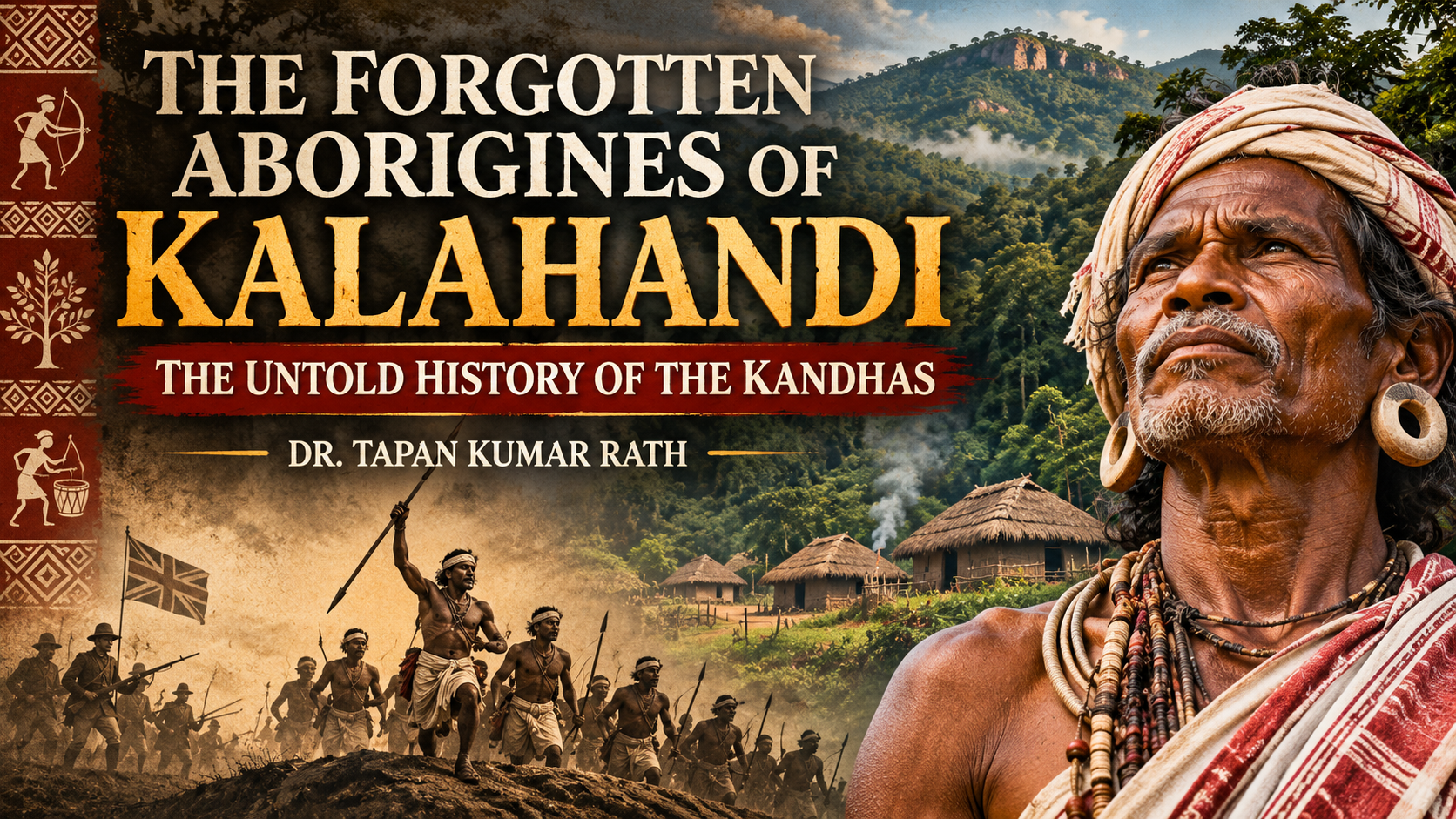
By and large, the aborigines of a region bear the stamp of its culture and tradition. It is the aborigines who are able to sustain the language and traditions, the attire and the etiquette in their original form, in spite of the influences of modern times. The history of our civilization unfolds that modern civilization raised its head by crumbling down the well-disciplined and nature-friendly civilization of the aborigines. It is being realized at present that nature and its resources are on the verge of extinction. The modern man understands this well. On the other hand, the original inhabitants have immense love and attachment to nature. The customs, festivals and traditions that the aborigines practise are meant to protect and nourish nature and the earth. It is worth mentioning here that they are quite aware of the development around them, but never surrender or prepare to leave their abode.
This can be observed by studying the lives of the aborigines of Kalahandi too. We discover from the history of the land that the ‘Kondhs’ or ‘Kandhas’ are the original inhabitants of the land, which is called the ‘Kandhan Anchala’. The names ascribed to this land were ‘Karunda’, ‘Indravana’, ‘Ratanpur’, etc. In 1856, the total population of Kalahandi was only 105,000, and one-third of it was made up of the Kandhas, which was approximately 75,000 to 80,000. The rest of the population consisted of the Dams, Banka, Sabar, Brahmin, Ghira, Teli, Kulta and Ghasia, which comprised one thousand, five hundred, four hundred, three hundred, three hundred, five hundred, two hundred and fifty families, respectively. Agriculture was not then the key profession of the natives. There were 18 gadas or districts in the then Kalahandi State, as also in Sambalpur. There were 108 subdivisions and 1,754 villages in 1856. It is worth mentioning here that the leaders or mukhias of these villages were the Kandhas, and there prevailed the ‘Self-Rule Administration’ (Swayatta Sasana) in these villages. The concept of paying taxes on their own land to the king was not known to these natives. It was during 1850–56, in the reign of Maharaj Udit Pratap Deo, that the idea of collecting taxes came to the land.
The tribals are generally very simple, innocent, kind, helpful and hospitable. They are very truthful and credulous. They live in groups and help each other in times of need. The Kandhas, however, occupied a privileged position in the district. It was a custom that the Raja had to sit on the lap of a Kandha of the Duckra clan during the coronation ceremony, and the prince had to marry a daughter of the Shermelka Kandhas. So, the Kandhas treated the king as their ‘son-in-law’. The Kandhas never tried to know how the king ruled, and the king, too, never interfered in the affairs of the Kandhas. Till 1700 AD, the tradition of human sacrifice prevailed among the Kandhas, and the kings were also never against this belief.
The ‘Kandha Sanskriti’, however, was not different from the ‘Vaidika Sanskriti’. The tradition of sacrifice is also mentioned in the Vedas. The wrath of the Kandhas fell on the king due to this very reason when the Britishers abolished this ‘sacrifice’. This disturbed the peaceful practice of their religious belief. It was during 1853 to 1882 that the Kandhas continuously fought against the king because of the transfer of land ownership to the Kulthias of Sambalpur and some Brahmins from the coastal region in 1853, during the reign of Udit Pratap Deo, in order to collect taxes on land. These two incidents made the Kandhas revolt against the king. As true lovers of the land, they never tolerated any foreigners entering their land.
In this freedom struggle of the Kalahandi Kandhas, thousands of Kandhas sacrificed their lives. Rindo Majhi of Urladani led this struggle against the king and the Britishers and was imprisoned during 1853–55 in the Rasulkonda jail and hanged later on. This is a perfect example of how the patriots of the land sacrifice their lives. The king, with the help of the mighty Britishers, crushed the revolt of the Kandhas, or ‘Kandha Meli’, in 1882. The massacre of the brave Kandhas frightened them and forced them to escape into the deep forest and leave the mainland for the outsiders.
This very landmark revolt topsy-turvied the lives of the people of this land. This bloodshed and violence silenced the people of this land forever, preventing them from raising their voices against the rulers of this land, a practice that has continued to date. The land adopted a new culture, and development in the fields of education, agriculture, health and economy started after 1882. The original inhabitants were deprived of these privileges. They were banished, and the new lights of modern civilization never fell on them. They imprisoned themselves in the caves and hills and led a life like primitive men. The aborigines of this land did not take part in the development process, which was the main cause of the tardy growth of this land. The land embraced different cultures, traditions and languages, which were never its own.
There is no doubt that the land would prosper and reach the zenith with the development of the aborigines of the land. The contribution of Karji Majhi is a landmark incident in the present decade, showing how the Kandhas can have innovative ideas and help in the process of growth. It is worth mentioning here that language is the index of a civilization, and the language of the Kandhas, the KUEE, has been well recognised as rich in vocabulary and in its linguistic aspects. The real study of the aborigines of the land, however, can be possible only through a close analysis of their language, KUEE.
(The views expressed are the writer’s own.)

Dr. Tapan Kumar Rath is a Reader in English at P.S. Higher Secondary School, Karlapada, Odisha. His academic interests include English literature, history, culture and the traditions of indigenous communities. He takes a keen interest in exploring and documenting the rich cultural heritage and historical identity of Kalahandi.
Email: tapanrath11@gmail.com
(Photo has collected from net )