

The greatness of literature and its role in society are known to one and all. It is as good as the mirror of society. As it has been rightly said, “Literature holds the mirror up to society.” Through the ages, it has reflected a picture of society, brought about reforms, and tried to guide man along the right path. The very course of human civilization is just unthinkable without literature.
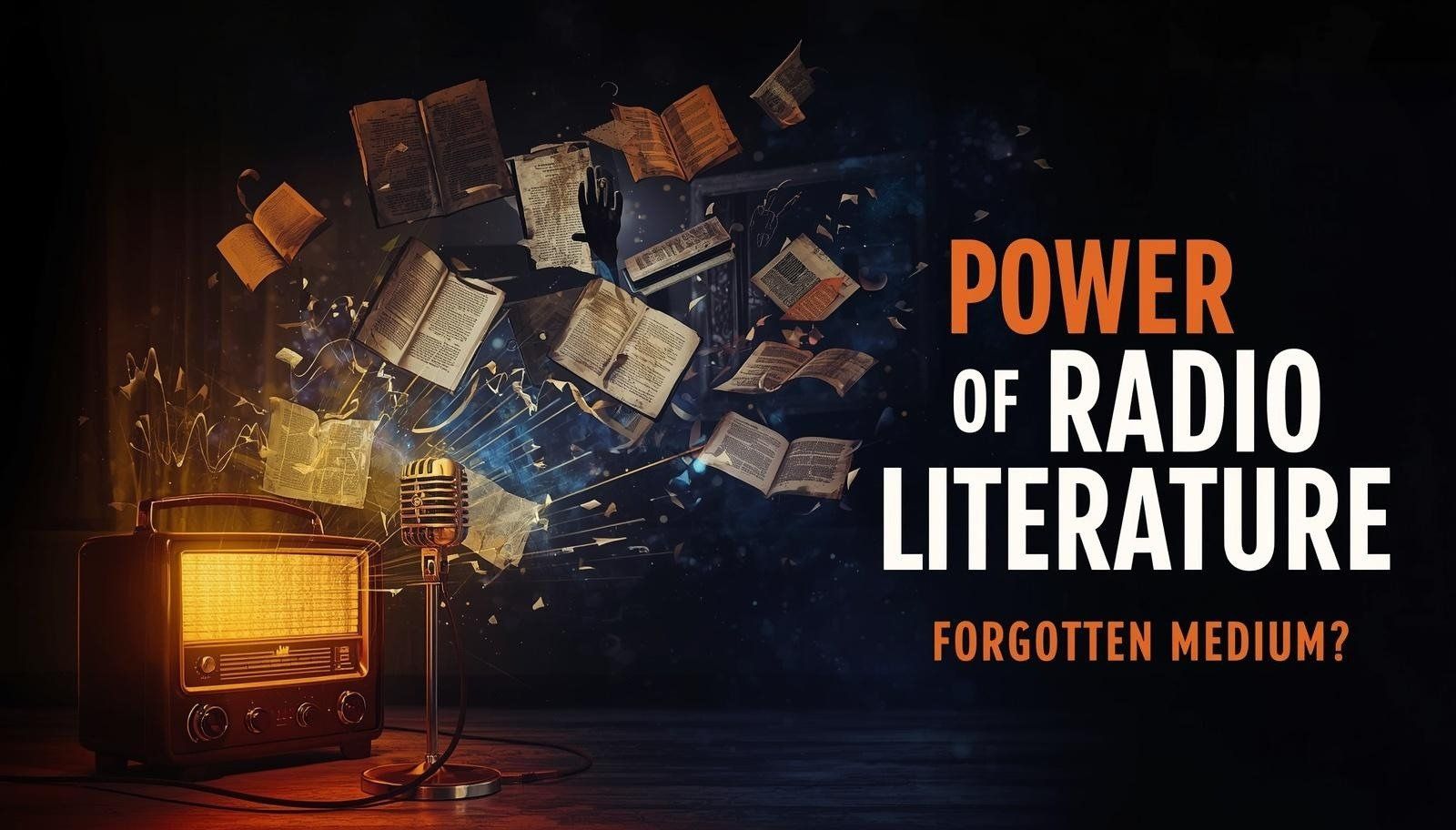
Since the dawn of civilization and even a little prior to it, man has tried to express his mind through writing. Before paper came and writing became extensive, there were rock edicts, cave walls, and palm leaves. Now the age of social or digital media has come. But literature broadcast over radio can be called Radio Literature. In India, radio was started before independence, and after it there has been rapid expansion in the radio network. At present in India, radio is reaching out to approximately cent percent landmass and population. The way poetry, prose, play, and one-act play are included in literature, the same is the case with Radio Literature.
In radio, in addition to common programmes, there are special audience programmes. The way programmes are produced for drama and literary lovers, for tiny tots, school boys, teenagers, youth, middle-aged and elderly persons, literary programmles are produced. Persons of the said age groups will create literature as per their standard for broadcast. In the programmes meant for literary lovers, new as well as established poets and writers normally participate.
Now let us see as to what is included in Radio Literature or Literary Magazine Programme. Normally, poetry, story, literary talk, or interview with an established poet or writer are broadcast in it. Literary criticism is also emphasized. This adds variety to the programme. Besides, one who conducts the programme adds an editorial to it. In the editorial, traditional or current literary topics are dealt with.
Literary Programme or Literary Magazine Programme can be produced in a language as per the area of broadcast, and duration may vary from 15 to 30 minutes. On special occasions, it may be of one hour or even more, but it is rare. Literary Magazine Programme is generally broadcast in Hindi, standard, and local languages.
In addition to programmes for special audiences, literary and play lovers, for the common audience also, talklets and talks are broadcast. The duration of talklets, talks, and plays is normally 5 minutes, 10 minutes, and 30 minutes respectively. Sometimes plays are of one hour duration, and playlets are of 15 minutes duration.
Now let us know as to how a Literary Magazine Programme is produced. Whatever items have been scheduled for broadcast will be recorded in advance, and before broadcast there will be editing to make a composite programme. A signature tune is used in the beginning and end of the programme so that its identity is maintained and listeners can easily recognise it. The editorial and other items are included in the programme.
The objective of the Literary Magazine Programme is to entertain the listener, inform about literature, and promote literature by including works of new as well as established writers in it. After independence, radio has achieved great success in this regard.
Now let us see as to how one should write for radio. In literature, normally difficult and bombastic words are used, but it is alright in print and social media. If somebody is not able to understand a word, he can do so by reading it over and over again or with the help of a dictionary. But he cannot do it in the case of radio and television. So the script should be simple. Though writers have their own style, yet they should be careful while writing for radio and television. Sentences should also be simple so that listeners can understand. Then pronunciation should also be right. While reciting poetry, story, or talk, the words should be too clear to be understood. Grammatical mistakes should also be avoided. Though poets and writers normally do not commit this mistake, yet they should be careful. Lastly, the script should be short and time-bound. A long script will require editing, which will disturb the tempo of the poet or writer.
In literary talks and plays also, these rules will be applicable. Since radio is an audio medium, one should be careful about sound. Drama scripts should be made suitable for radio. Stage drama scripts have also to be suitably amended.
The role of radio is really commendable in forwarding literature and culture along with agriculture after independence. In fact, radio not only encourages new poets and writers but also modifies their writing, style, and language. He knows that he is writing for a powerful medium. Radio is an extensive audio medium which creates a mental image in the listener. The poet or writer directly addresses the listener through radio. He may get some direct reactions on the stage or in social media, but whatever he has written or said over radio is taken as final. So radio is a solid medium for the poet and writer.
The Literary Magazine Programme over radio is broadcast in Hindi, standard, and local languages. Before the dawn of digital media, radio has forwarded literature, polished language, and given an opportunity to new as well as established poets and writers at an all-India level. Radio literature has got good appreciation, has reached areas where other media are not available, has influenced people, and has brought about reforms as per requirement.
There are media in plenty like print media, radio, and social media. Let the poets and writers go on creating literature. They have engaged themselves in a great work. Their literature will not only influence people but also stir up their minds and try to rectify society. Let them write in whichever language they want to write. No language is either big or small. Literature can be written in any language.
Let them express their inner mind and reflect society. They should not think that the language of their expression will have a limited area of effect. Let them create literature of a high quality only. The first objective of literature is entertainment; then only reforms or reflection are involved. They should also think of the medium for which they write and how their script could be befitting for the medium. If they write for the stage, let them do so. For radio, the script should be radiogenic. Sentences should be short and simple. Music and sound effects will come in place of scenes. Then only the same will be powerful over radio. The present-day poets and writers will have to polish and adapt themselves.
Radio is a powerful medium. Starting from the green revolution, radio has to a great extent been instrumental in forwarding the economy, literature, drama, music, and culture in the country. One more speciality of radio is that it is reaching out to approximately cent percent landmass and population of the country, and people can listen to it at the same time doing any other work. Even during natural calamities, one can listen to radio. So even when other media have come up, the importance of radio has neither decreased nor will it decrease in future. Now radio is available even on the mobile set. Presently, the government has taken another major step. To take radio to the grassroots level, community radio stations are being encouraged.
So poets, writers, and litterateurs may very well continue their creative and all-time literary activities. Let them create good literature. There is no dearth of platform for them. Let them create literature for all the media. The future of literature, radio, and radio literature is undoubtedly bright.
(The views expressed are the writer’s own)
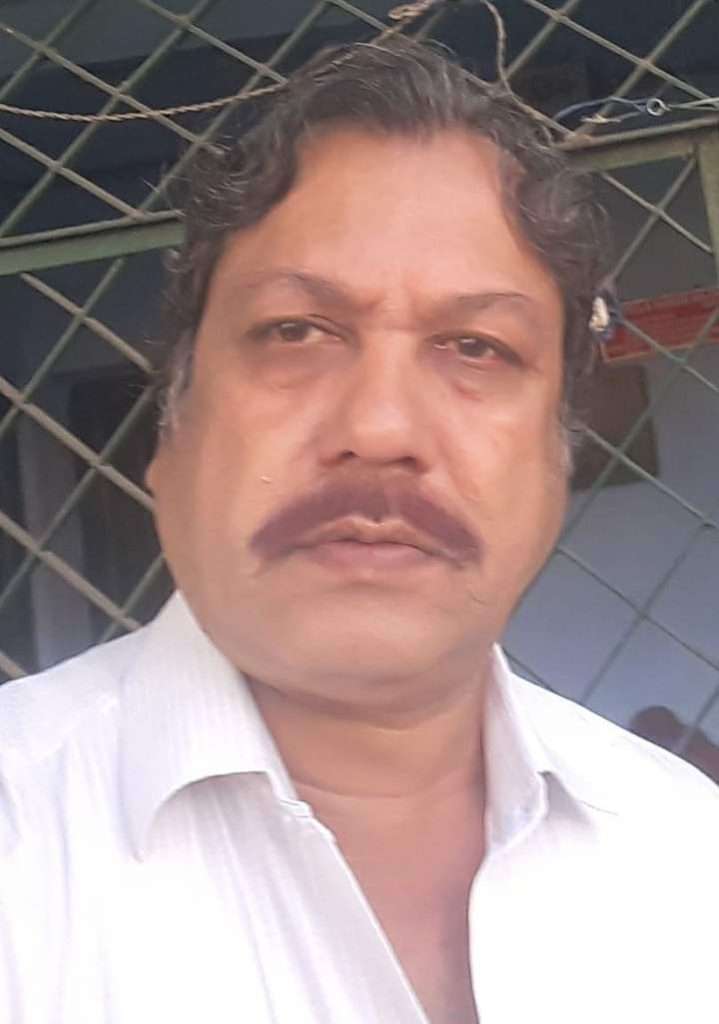
Mr. Prafulla Kumar Majhi,
Retired Asst. Director, A. I. R, is an eminent Scholar and freelance writer in English & Odia. His areas of interests are sociocultural, economic, literary, historical and analytical studies and writings.
Email: airprafulla61@gmail.com
Mobile.9861007190